Golfers often focus on clubs, grips, shafts, swing speed, launch angle, and ball flight—but the golf ball itself is easy to overlook. That small ball takes a lot of abuse every round, from drivers, irons, and wedges to cart paths, trees, sand, water, and the occasional mishit across the green.
If you care about your setup, a key question is how often you should replace your golf ball. The answer depends on how you play, the condition of the ball, and whether you’re practicing, playing casually, or aiming for your best score.
How Long Does a Golf Ball Last?
A golf ball can last through multiple rounds if it stays clean, smooth, and free of cuts or heavy scuffs. Modern balls are built to withstand repeated impacts, so you don’t need to replace one after every hole or round unless it’s damaged.
For most golfers, a ball can handle at least 18 holes if it avoids major damage. Some players even use the same ball for multiple rounds, especially if they’re not putting heavy spin on wedges or hitting into rough surfaces.
However, just because a ball looks fine doesn’t mean it’s performing at its best. Damage to the cover can affect spin, distance, roll, and control. Replacing a golf ball at the right time removes one more variable from your game.

Signs You Should Replace a Golf Ball
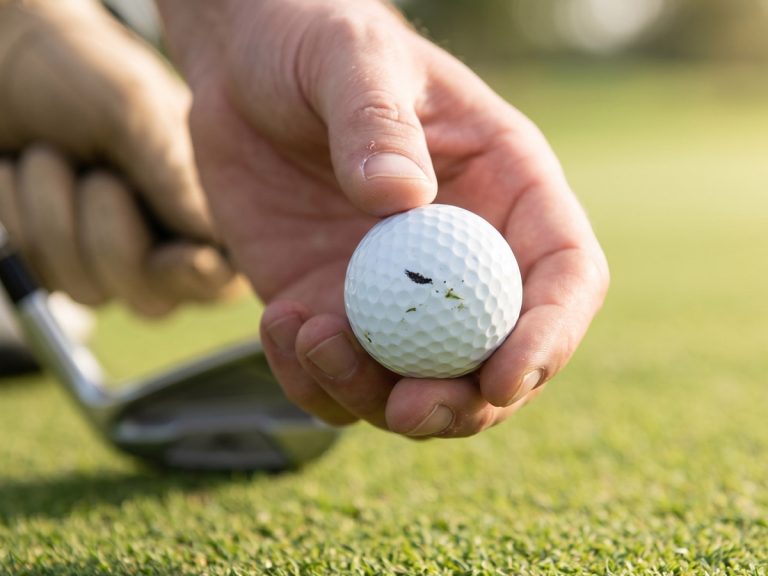
The easiest way to know when to switch balls is simple: inspect it. You don’t need any tools—just look and feel the surface. Replace your ball if you notice:
- Deep cuts in the cover
- Large scuffs from cart paths, rocks, or trees
- Peeling or cracked outer cover
- Flat-looking spots
- Heavy discoloration that won’t clean off
- Rough spots that feel different from the rest of the ball
Minor cosmetic marks usually aren’t a big deal, but if you can feel a cut or raised area with your finger, it’s time to replace the ball.
Why Ball Damage Matters
Golf balls are layered—cover, mantle, and core work together to create distance, spin, feel, and control. Damage to the cover can alter how the ball flies or reacts.
A scuffed ball can disrupt airflow, causing unexpected curves or loss of distance. Cuts in the cover can reduce wedge spin, especially around the green. Just like a club with a rough surface doesn’t perform the same, a damaged ball can produce inconsistent results.
After Hitting a Cart Path or Tree
Cart paths: Usually, yes, replace the ball. Hard bounces on concrete or asphalt can scrape or scuff the cover. Minor marks are okay for casual play, but serious scoring rounds call for a replacement.
Trees: It depends. A clean hit may leave the ball fine, but contact with bark, branches, rocks, or hard ground can cause cuts or rough spots. Wipe the ball clean and inspect it—if it’s damaged, replace it.

How Often Should Beginners Replace Balls?
Beginners don’t need to replace balls as often as low-handicap players. Loss is more common than wear. Use balls until they’re lost or visibly damaged. Small scratches are fine for practice rounds, but heavily scuffed or cut balls can make the game harder.
How Often Should Better Players Replace Balls?
Low-handicap or competitive golfers should be more selective. If you rely on wedge spin, approach shot control, or consistent putting, replacing balls sooner makes sense. Many better players rotate worn balls into practice and keep only pristine balls for scoring rounds.
Using Old Golf Balls
Old balls can be used if stored properly—indoors, away from extreme heat, cold, or moisture. Balls left in garages, trunks, ponds, or hot sheds may lose performance. Waterlogged balls, in particular, are unreliable. For casual practice, older balls are fine, but for serious rounds, stick with newer, trusted balls.

Practice Balls vs. Game Balls
It’s smart to separate practice balls from game balls. Use your cleanest balls for scoring rounds and older or scuffed balls for practice, chipping, or range work.
A simple system:
- Game ball: Clean, smooth, no cuts, no heavy scuffs
- Practice ball: Light scuffs or minor cosmetic marks
- Trash ball: Cut, cracked, peeling, or badly damaged
This makes it easier to know when to replace a ball.
Consistency in Ball Choice
For consistent performance, stick with the same brand and type. Switching balls frequently can affect spin, distance, and feel. Casual golfers may not notice, but players focused on improvement benefit from consistency.
Tournament or Important Rounds
For serious rounds, start with clean balls in excellent condition. Inspect frequently—after cart paths, trees, bunkers, or hard surfaces—and replace any damaged ball immediately. One saved ball is not worth a mis-hit approach or a poor putt.

Quick Rule of Thumb
Replace your ball when damage goes beyond cosmetic.
- Casual rounds: Replace when visibly damaged
- Competitive rounds: Replace at the first noticeable scuff or cut
- Practice: Use older balls until badly damaged
- Putting: Avoid balls with rough or raised spots
Don’t Forget Your Clubs
While inspecting your balls, check your clubs. Scratched or worn clubs can affect performance. Keeping both your balls and clubs in good condition helps you play more consistently.