Rory McIlroy

Rory McIlroy defeats Scottie Scheffler to win the Masters for the second consecutive year

Rory McIlroy added a remarkable chapter to his distinguished career by successfully defending his Masters title at Augusta National on Sunday, securing his sixth major championship. His final round, marked by a blend of skill, resilience, and composure, culminated in a 1-under 71, finishing the tournament at 12-under par.

This victory further cements his place among the elite in Masters history, coming just a year after he completed the career Grand Slam.

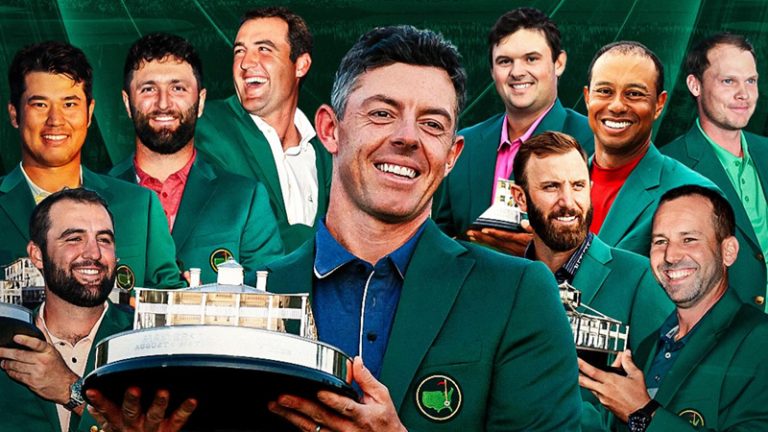
McIlroy joined luminaries Jack Nicklaus (1965, 1966), Nick Faldo (1989, 1990), and Tiger Woods (2001, 2002) as the only player to win back-to-back Masters championships.

McIlroy remarked following the victory, “I just can’t believe I waited 17 years to get one green jacket, and I get two in a row.” “I’m not sure, it’s just sort of the way. I believe that my years of persistence in this golf competition have now begun to pay off. The weekend was difficult. The majority of my work was completed on Thursday and Friday. But I’m just so glad to have persevered and finished the task.

With the win, McIlroy tied Nick Faldo for the most major titles won by a European player in the modern era with six. However, the route to another green jacket was anything but cozy.

Read Also: Rory McIlroy opens 2026 Masters with poised 5-under 67 to share early lead

A tense final round

Even though McIlroy had a dominant position going into the weekend, his event turned out to be far more difficult than anticipated. By the time the final round started, the pressure had increased and the leaderboard had narrowed, despite the fact that he had established a record six-shot lead at the halfway mark. Early on Sunday, there was trouble.

After a costly run that included a three-putt double bogey from ten feet on the par-3 fourth and another bogey at the par-3 sixth, McIlroy fell two strokes behind. The tournament, which had appeared to be well under his control, had suddenly turned into a conflict.

Cameron Young, the playing companion, had the lead on the first nine holes, but he lost three strokes during a four-hole stretch at the turn, undermining his challenge.

That was the opening McIlroy needed.

Momentum shift at Amen Corner

McIlroy made a precise start to his return. On the par-4 seventh hole, he hit a drive and made the birdie. Shortly after, he made another birdie at the par-5 eighth hole, cutting the gap to just one stroke for Justin Rose, who had been making birdies on holes five, seven, eight, and nine.

Rose, who has now been second three times in his career at the Masters, momentarily appeared to be able to undermine McIlroy’s defense. However, Augusta’s deceptive second nine quickly changed the course of events.

Rose’s strategy veered right at the par-4 eleventh hole, resulting in bogey. The next hole, the well-known par-3 12th, was just as harsh; he missed the green long and left, then stubbed his chip for another bogey.

Rose immediately dropped to 10 under, one stroke behind McIlroy. The reigning champion refused to give up the advantage once again after that.

On the 12th hole, McIlroy made what may have been his most significant shot of the day, putting his tee shot as near to the pin as anybody in Sunday’s field, just seven feet.

He rolled in the birdie putt with composure. At the par-5 13th, he made another birdie to move up to 13 under and gain a three-shot lead.

“I believe the tee shot was made on 12 and again on 13 to give me the opportunity to go for the green in two. All week, I had trouble with that tee shot. I hit a really strong, committed swing off the 13th tee, which allowed me to go for the green in two after I was up in the pine straw there too many times. “It was huge to make a birdie there after the birdie on 12,” McIlroy remarked.

Read Also: Masters Tournament champions: Last 10 years winning scores and prize money

Scheffler’s late push

World No. 1 Scottie Scheffler launched a valiant attack while McIlroy moved ahead.

With bogey-free rounds of 65 and 68, Scheffler had an outstanding weekend performance. He was within two strokes of the lead after his run, which featured birdies at the par-5 15th and par-3 16th.

At the par-4 17th, when Scheffler faced an 18-foot birdie try similar to Jack Nicklaus’ famous putt decades before, the suspense reached a pinnacle. As the ball moved toward the hole, the gallery stood up, but it slipped over the left edge.

Scheffler finished alone in second place at 11 under after the miss put him two strokes behind.

Closing with nerves

McIlroy still had work to do despite having a late cushion. The par-5 15th hole momentarily promised catastrophe as his third ball flirted with the water protecting the green, but he parred the 14th hole safely. For a minute, memories of a similar scenario from the previous year came back, but McIlroy escaped with par and the ball remained dry.

His tee shot on the par-3 16th hole flew well into the valley behind the green. He punched in for another steady par after skillfully navigating Augusta’s hills with a putter from off the surface.

McIlroy missed the green to the right on the 17th hole, but he recovered composedly and put up a simple par to keep his lead. One more exam remained.

A chaotic finish

McIlroy just needed a bogey to win from the 72nd tee. However, Augusta’s last hole offered a final, spectacular turn.

On the par-4 18th, his tee shot cut horribly to the right, landing him in the pine straw. He hit an aggressive 8-iron from 179 yards that flew over the woods and ended up in the front greenside bunker.

McIlroy hammered the sand shot to a distance of 12 feet from a slightly buried lie. He won the championship after two putts.

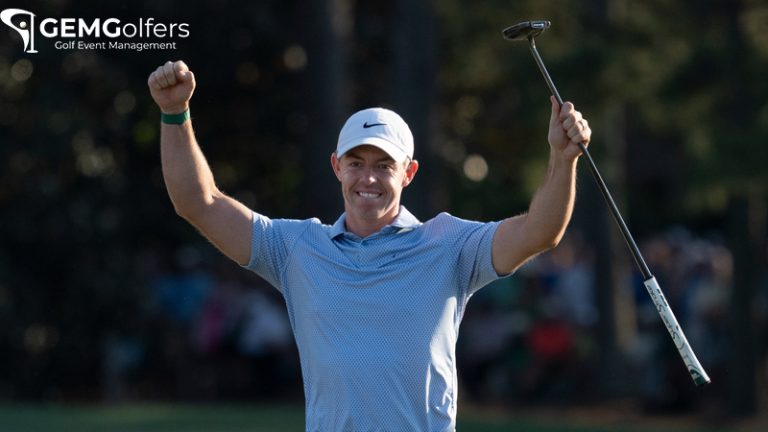
McIlroy merely lifted his arms and yelled upward, clearly relieved after yet another long Masters match, in contrast to the dramatic collapse to his knees following the triumph last year.

McIlroy remarked, “Maybe good things come to those who wait.” “Just keep moving forward. I am currently two or three shots below where I was in last year’s last round, but I played good golf after that.

A legend at Augusta

Tyrrell Hatton, Russell Henley, Justin Rose, and Cameron Young shared third place at 10 under, behind McIlroy and Scheffler.

However, McIlroy once again had the day. The Northern Irish player displayed the tenacity that has characterized his career by giving up a six-shot lead and fighting back through Augusta’s renowned back nine.

And one thing became evident as the sun descended over Augusta National. Chasing the Masters history is no longer Rory McIlroy’s only goal.

He is now an integral part of it.

Rory McIlroy

Rory McIlroy opens 2026 Masters with poised 5-under 67 to share early lead

AUGUSTA, Ga. — Rory McIlroy began the 2026 Masters Tournament with the type of controlled, strategic round that has long been required to contend at Augusta National. Navigating swirling winds, firm greens, and the subtle pressure that accompanies the season’s first major, McIlroy pieced together a polished opening round of 5-under-par 67, leaving him tied for the lead after Day 1 and firmly in position to challenge for the green jacket.

The Northern Irishman’s round was defined by patience early, precision with his irons throughout the middle stretch, and a confident putting display that allowed him to convert key birdie opportunities.

Steady start sets the tone

McIlroy opened his day at the 1st hole, Tea Olive, a demanding 445-yard par-4 that often punishes aggressive starts. Choosing a conservative line off the tee with a controlled driver, he found the right side of the fairway. From roughly 165 yards, McIlroy hit a high, soft 8-iron that settled about 20 feet from the hole. The putt slid just right, but the comfortable two-putt par provided a steady beginning.

At the par-5 2nd, McIlroy showed early intent. After a powerful drive left him around 240 yards to the green, he opted for a fairway wood but played it cautiously to the front fringe rather than attacking the flag. His delicate chip left a birdie chance of about six feet, but the putt narrowly missed. Still, the stress-free pair kept momentum intact.

The 3rd hole, a tricky par-4, required precision rather than power. McIlroy hit a hybrid from the tee to avoid the fairway bunkers, leaving himself around 150 yards. A crisp 9-iron found the center of the green, and he calmly two-putted for par.

First birdie arrives at the 4th

McIlroy’s first breakthrough came at the 4th hole, a 240-yard par-3 that demands an exacting long-iron shot. With the hole cut slightly back and left, McIlroy selected a 5-iron and struck a towering shot that landed softly on the front portion of the green and rolled to within 12 feet.

The birdie putt was struck firmly, tracking straight into the center of the cup. The gallery surrounding the elevated green responded with a roar as McIlroy moved to 1-under, signaling the start of what would become a composed scoring stretch.

Precision birdie at the 5th

At the 5th hole, one of Augusta’s most difficult par-4s, McIlroy displayed both patience and accuracy. A strong drive split the fairway, leaving about 195 yards to a back pin. With the green firm, he chose a 6-iron, flighting it slightly lower to control spin.

The ball landed just short of the pin and rolled to about 10 feet. McIlroy studied the subtle right-to-left break before stroking the putt confidently. It caught the left edge and dropped, moving him to 2-under and gaining momentum early in his round.

Navigating Augusta’s mid-course challenge

The 6th hole, a delicate par-3, tested McIlroy’s touch. Using a wedge from 180 yards, he aimed safely toward the center of the green. His birdie attempt from 25 feet came up short, resulting in a routine par.

At the 7th, McIlroy faced another demanding par-4. A drive slightly to the right of the fairway forced him to play defensively. His approach with a 7-iron landed on the front edge, and he two-putted from distance to remain at 2-under.

The 8th hole, Augusta’s inviting par-5, offered a prime scoring opportunity. After a powerful drive, McIlroy had just over 230 yards remaining. Opting for a 5-wood, he attacked the green in two. The ball finished on the front fringe, about 35 feet away.

His eagle attempt tracked well but stopped a few feet short, leaving a simple tap-in birdie that moved him to 3-under par. It was a classic Augusta birdie—aggressive but controlled.

Calm through the turn

The 9th hole presented a demanding uphill approach. McIlroy’s drive found the fairway, but his second shot from 175 yards settled safely in the middle of the green. A cautious two-putt gave him a front-nine 34, keeping him in early contention.

Momentum builds on the back nine

McIlroy opened the back nine with a steady par at the 10th, navigating the steep downhill fairway with a precise drive. His approach from the right side of the fairway finished safely on the green, where he two-putted from about 30 feet.

The 11th hole, the opening test of Augusta’s famed Amen Corner, demanded accuracy. McIlroy chose a 3-wood from the tee to find the fairway. His approach with a mid-iron settled safely left of the pin, and he escaped with par after a cautious lag putt.

Birdie brilliance at the 12th

At Golden Bell, the par-3 12th, McIlroy delivered one of the round’s most precise shots. With the pin cut toward the back shelf, he selected a 9-iron and struck a perfectly controlled shot that landed just beyond the flag and spun back to eight feet.

The putt required a delicate read across Augusta’s notoriously slick surface. McIlroy’s stroke was smooth and confident, the ball falling cleanly into the cup for birdie, pushing him to 4-under.

Capitalizing on the 13th

Moments later, McIlroy took advantage of another scoring chance at the par-5 13th. A beautifully shaped draw with the driver wrapped around the corner of the dogleg, leaving roughly 215 yards to the green.

With Rae’s Creek guarding the front, McIlroy selected a long iron, striking a towering approach that landed just short of the green and rolled onto the putting surface. His eagle putt from about 25 feet slid just past the hole, but the easy birdie moved him to 5-under par, tying the tournament lead.

Composure to close

From there, McIlroy managed the closing stretch with veteran composure.

On the 14th, a demanding par-4 without bunkers, he played conservatively. A drive to the right side left a clear angle, and his approach finished safely on the green for par.

The 15th hole tempted aggression, but McIlroy elected to lay up after his drive left an awkward angle. His wedge from 90 yards spun back to about 15 feet, but the birdie attempt grazed the edge.

At the par-3 16th, McIlroy nearly produced a highlight moment. His tee shot landed on the right slope and trickled toward the hole, finishing six feet away. The putt narrowly missed, leaving him with another par.

The 17th required a precise drive between towering pines. McIlroy found the fairway and struck a controlled 8-iron approach to the middle of the green, calmly securing par.

Finally, on the 18th, Augusta’s dramatic finishing hole, McIlroy delivered a confident closing drive that split the fairway. His approach with a 7-iron found the heart of the green, and a safe two-putt sealed the 67.

Early statement at Augusta

By day’s end, McIlroy’s 5-under-par 67 placed him tied for the lead, a significant opening statement at a course where momentum can build quickly over four days.

What stood out most was his balance of aggression and patience. He capitalized on Augusta’s scoring holes—the 8th and 13th—while executing precise birdies at the 4th, 5th, and 12th. Equally important, he avoided mistakes in Augusta’s most treacherous sections, particularly through Amen Corner.

The round showcased McIlroy’s sharp iron play and confident putting—two elements that often determine success at the Masters.

With three rounds remaining, the leaderboard remains tightly packed. But if Thursday’s performance is any indication, McIlroy has positioned himself exactly where contenders want to be: near the top, playing freely, and building momentum toward the weekend at Augusta National.

Masters Winners by Year

Masters Tournament champions: Last 10 years winning scores and prize money

The Masters Tournament at Augusta National is one of the most renowned competitions in professional golf. The world’s top golfers battle for the renowned Green Jacket each year. In addition to the prestige of winning at Augusta, winners also receive a sizable prize, which has increased over time as the tournament budget has grown.

The Masters has provided memorable moments, historic victories, and record-breaking performances over the last ten years. Every Masters edition is a highlight of the golf calendar because both legendary players and up-and-coming talent have made their imprint on the competition.

Below is a look at the last 10 Masters champions and their winning scores.

YearMasters ChampionWinning ScoreTournament HighlightsPrize Money
2025Rory McIlroy−11McIlroy won in a dramatic playoff to finally claim his first Green Jacket and complete the career Grand Slam.$4,200,000
2024Scottie Scheffler−11Scheffler dominated Augusta with consistent rounds to secure his second Masters title.$3,600,000
2023Jon Rahm−12Rahm surged ahead with a strong final round to capture his first Masters victory.$3,240,000
2022Scottie Scheffler−10The world No.1 golfer maintained control throughout the week to win his first major.$2,700,000
2021Hideki Matsuyama−10Matsuyama became the first Japanese golfer to win the Masters.$2,070,000
2020Dustin Johnson−20Johnson set a Masters record for the lowest winning score in tournament history.$2,070,000
2019Tiger Woods−13Woods completed a historic comeback by winning his fifth Masters title.$2,070,000
2018Patrick Reed−15Reed led most of the tournament and secured his first major championship.$1,980,000
2017Sergio García−9García defeated Justin Rose in a playoff to claim his long-awaited first major.$1,980,000
2016Danny Willett−5Willett capitalized on a dramatic final-round shift to win the Green Jacket.$1,800,000

Memorable moments from the last decade

Over the last 10 years, a number of Masters triumphs are notable for their importance in golf history. Tiger Woods’ 2019 victory, his first major triumph in almost 10 years and his fifth Masters championship, is still regarded as one of the most legendary comebacks in sports.

Dustin Johnson’s astounding score of −20, the lowest winning score ever recorded at Augusta National, broke a tournament record in 2020. In the meantime, supporters around Asia were inspired when Hideki Matsuyama became the first Japanese golfer to win the Masters in 2021.

Having won the event twice in a short period, Scottie Scheffler has been the most reliable player in recent years. His wins demonstrated his consistent performance and aptitude for the difficult Augusta course.

Growing prize money at the Masters

As the sport continues to expand internationally, the Masters prize money has climbed dramatically. The winner’s share has risen beyond $3 million in recent years; Rory McIlroy won $4.2 million in 2025.

The Master’s true status is found in its history and tradition, even though the cash awards are substantial. One of the greatest accomplishments in professional golf is still winning the Green Jacket and being added to the list of previous winners.

As the Masters continues to develop, new winners will try to make a lasting impression on golfers worldwide and add their names to this historic competition.