At Gem Golfer, we talk to golfers who care about performance and presentation, and we work with shop owners and DIY installers who want clean, detailed work on smaller, high-visibility surfaces.
Golf clubs are personal tools, and each one has a specific job. Just like a good wrap install, a good golf setup is about having the right tool for the right moment without overcomplicating it. This guide will explain how many clubs golfers carry, why 14 became the standard, and how players build a practical set that fits their game.
Golf Is an Approachable Sport (Even If the Bag Looks Like a Toolbox)
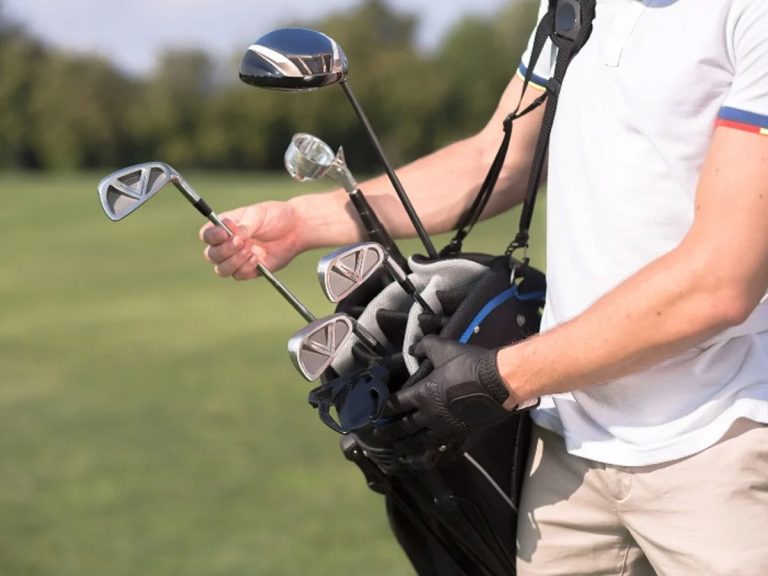
Golf can look intimidating—especially when you see someone roll up with a full bag of clubs, gadgets, and headcovers. But the sport is more approachable than most people think. You don’t need to be a scratch golfer to enjoy it, and you don’t need a “perfect” set to get started.
The key is understanding that clubs aren’t random duplicates. Each club is designed for a specific distance, lie, and shot type. That’s why golfers eventually gravitate toward a full bag: it gives them options for whatever the course throws at them.
Beginners often ask:
- How many clubs should I carry when starting out?
- How many clubs in a set is “normal”?
- Is 14 really necessary?
We’ll cover all of that without making it more complicated than it needs to be.

Quick Guide to Club Types for Beginners
Before diving into why golfers carry 14 clubs, it helps to understand what those tools actually do. A “standard” set is simply a balanced mix of these club types built to cover different distances and shot needs.
| Club Type | Primary Use & Characteristics |
| Driver | Built for maximum distance off the tee. Features the biggest head, longest shaft, and lowest loft. |
| Fairway Woods | Used for long shots off the turf or tee. Great for distance when the driver isn’t the right play. |
| Hybrids | A blend between fairway woods and irons. Much easier to hit than long irons for most golfers. |
| Irons | Typically numbered (3–9). Used for mid-range approach shots and precise distance control. |
| Wedges | Specialty scoring clubs for shorter approach shots, chips, pitches, bunker shots, and high-loft control. |
| Putter | Used on the green (and sometimes just off it) to roll the ball into the hole. The most-used club in the bag. |
Used on the green (and sometimes just off it). The most-used club in the bag.
That’s the foundation. A “standard” set is just a balanced mix of these club types, built to cover distances and shot needs.
Why Do Golfers Carry 14 Clubs?
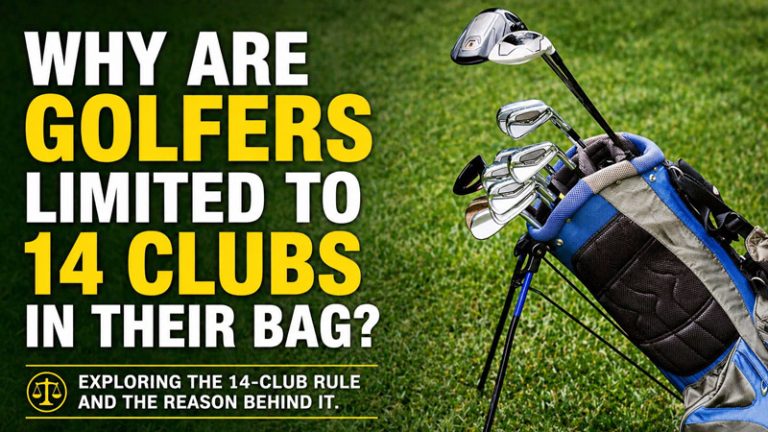
So, why do golfers carry 14 clubs? Two reasons:
1) Rules and Standardization
The rules of golf set the maximum at 14 clubs. That cap exists to prevent players from carrying a club for every tiny situation and turning the game into equipment overload.
Even if you’re not playing tournament golf, most golfers follow the standard because it’s the most practical limit.
2) Coverage Across Distances and Situations
The real reason golfers choose golfing with 14 clubs is coverage. A course demands:
tee shots
long approach shots
mid-range shots
short “scoring” shots
recovery shots
bunker play
putting
Carrying fourteen clubs gives you enough tools to manage those situations without gaps. It’s less about “more clubs” and more about “fewer bad options.”
When people ask “how many clubs do golfers carry?”, the honest answer is: enough to cover their distances and reduce risk.

Bare Minimum Set of Clubs to Carry
If you’re brand-new or want a lightweight setup, you don’t need a full bag on day one. A bare-bones set still works, especially for casual rounds or shorter courses.
A solid minimum might include:
Driver or a fairway wood
5 iron or hybrid
7 iron
9 iron
Pitching wedge
Sand wedge
Putter
That’s 7 clubs enough to get around the course and learn the basics.
So if you’re asking how many clubs to carry as a beginner, the answer is: start with what helps you learn clean contact and consistent distance. Add clubs as your game develops.
Number of Clubs for an Optimal Set
Once you’re playing regularly and trying to lower scores, an optimal bag usually approaches the full limit of 14. Not because you need all 14 to “look legit,” but because it tightens distance gaps and adds scoring tools.
A common 14-club setup looks like this:
Driver
3-wood
5-wood or hybrid
4–9 irons (or hybrids mixed in)
Pitching wedge
Gap wedge
Sand wedge
Lob wedge (optional for many golfers)
Putter
This gives you better distance coverage and better control around the green. And that’s why most golfers carry 14 clubs: it gives flexibility without turning the bag into clutter.
A key detail: the “optimal” set isn’t universal. Some golfers drop a long iron for an extra wedge. Some drop a fairway wood in favor of a second hybrid. The best set is the one that matches your swing and your course.
So when someone asks how many clubs are in a set, the best answer is:
14 is the maximum
10–12 is common for newer players
“Optimal” depends on your distance gapping
At GemGolfer, club skins are built for golfers who want clean customization without permanent changes. For wrap shop owners and DIY installers, golf club skins are a great niche because the skills transfer directly:
clean prep
controlled stretching
smooth finish on curved surfaces
sharp trimming
Golf Is an Approachable Sport (Even If the Bag Looks Like a Toolbox)
Golf can look intimidating, especially when you see someone roll up with a full bag of clubs, gadgets, and headcovers. But the sport is more approachable than most people think. You don’t need to be a scratch golfer to enjoy it, and you don’t need a “perfect” set to get started.
The key is understanding that clubs aren’t random duplicates. Each club is designed for a specific distance, lie, and shot type. That’s why golfers eventually gravitate toward golfing with 14 clubs: it gives them options for the situations the course throws at them.
Quick Guide to Club Types for Beginners
Before diving into why golfers carry 14 clubs, it helps to understand what those tools actually do. A “standard” set is simply a balanced mix of these club types built to cover different distances and shot needs.