Credits: Golfpsych

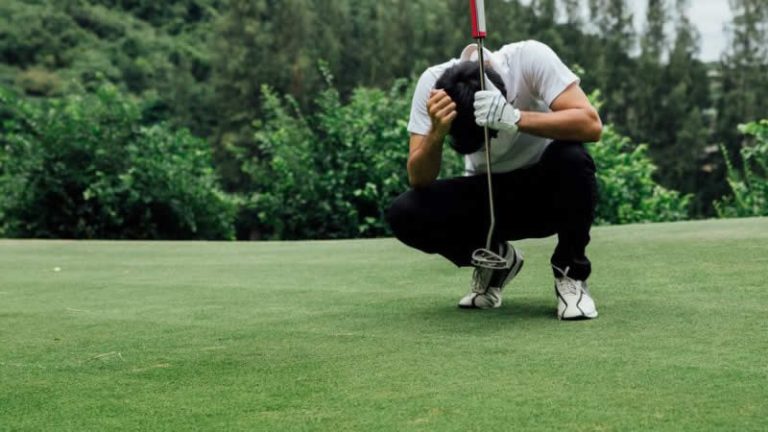
Mental Resiliance: Top 5 Mental Mistakes that Amateurs Should Avoid

Mistake 1: Allowing Ego to Interfere

“Impressing people is utterly different from being truly impressive.” – Ryan Holiday, Author of “Ego is The Enemy”

We all possess some ego, but successful players master its control. What exactly is ego? It can be thought of as a drive to enhance our self-worth or social standing through achievements in golf. The ego craves pleasure, validation, and identity maintenance via external successes like winning or impressing others. Happiness becomes contingent on scoring well or finishing high in a tournament.

Consequences of Playing “Ego Golf”

  • Ego constantly narrates how good or bad we are, based on others’ perceptions.
  • Over-investment of self in the game attaches your self-worth to your scores.
  • Results in emotional highs and lows during rounds.
  • Confidence fluctuates with performance and scores.
  • Difficulty staying present and focused on each shot.
  • Mind’s constant striving and judging hinder entering the FLOW state.
  • The game’s beauty is overshadowed by future outcomes.

Taming the Ego

Playing with less ego doesn’t mean a lack of care or competitiveness. Many top players are competitive without an ego-driven mindset. They don’t worry about others’ opinions if they fail. Achieving great results requires separating oneself from the outcomes. This conditioned process requires consistent practice, using an internal “mental scorecard” rather than an external one, leads to mastery in golf.

Mistake 2: Losing Focus

“The successful warrior is an average man with laser-like focus.” – Bruce Lee

Quieting the mind, staying present, and focusing precisely are crucial skills in golf. Regardless of previous or upcoming shots, focus on “What’s Important Now” to maximize your chances. Many players lose focus at critical moments, allowing doubts about their swing or potential outcomes to interfere. Effective focus involves consistency and mental discipline.

Improving Focus

  • Have a clear pre-shot routine aligned with your personality.
  • Intent and accountability are key.
  • Regular practice and self-discovery refine focus.

Mistake 3: Ignoring Negative Thinking Patterns

“Know Thyself.” – Socrates

Recognize your negative thinking patterns that trigger confidence loss and mood changes. Identify behaviors that need change. Self-discovery is essential to improve your mental game. Awareness and interception of negative thoughts allow you to refocus positively or neutrally, altering automatic negative patterns over time.

Mistake 4: Magnifying the Importance of a Round or Shot

When players emphasize a “big tournament,” they inadvertently increase pressure. Treating every shot and tournament equally helps maintain performance consistency. Change your interpretation of specific shots or tournaments to neutral terms. Focus on process rather than outcome, cultivating this habit through repetition.

Keeping Perspective

It’s essential to remember that every shot, regardless of the context, requires the same level of focus and effort. By placing undue importance on certain shots or rounds, you create unnecessary stress, which can hinder performance. Instead, approach each shot with the mindset that it is an opportunity to execute your best technique and strategy. This perspective helps you stay calm and composed, regardless of the situation.

Practical Tips

  • Language Matters: Pay attention to how you talk about upcoming tournaments or critical shots. Use neutral language to describe them.
  • Visualization: Visualize every shot with the same level of importance during practice rounds.
  • Routine: Stick to your pre-shot routine to maintain consistency and reduce pressure.

Mistake 5: Struggling to Bounce Back from Setbacks

“It is not external events themselves that cause us distress, but the way in which we think about them…” – Epictetus

Setbacks on the course are inevitable. How you respond to them defines your subsequent performance. Interpreting setbacks constructively helps maintain confidence and bring your best to the next shot. Unhelpful interpretations can negatively impact mood and performance.

Resilience Building:

Bouncing back from setbacks is crucial for long-term success in golf. It’s important to view each setback as a learning opportunity rather than a failure. Developing resilience involves training your mind to stay positive and focused, even when things don’t go as planned.

Strategies to Bounce Back

  • Self-Talk: Use positive self-talk to counter negative thoughts. Remind yourself of past successes and your ability to recover.
  • Short Memory: Develop a “short memory” for mistakes. Once a shot is over, it’s in the past. Focus only on the next opportunity.
  • Learning Mindset: Analyze what went wrong objectively and use it to improve. This approach turns setbacks into valuable learning experiences.
  • Physical Reset: Take a deep breath, relax your muscles, and reset physically before your next shot to clear your mind of the previous mistake.

By integrating these strategies into your game, you can turn setbacks into comebacks, maintaining a positive trajectory throughout your round.

Golf Ettiquette

Mastering Basic Golf Etiquette: A Guide for First-Time Players

Golf is more than just a game; it’s a sport steeped in tradition, camaraderie, and etiquette. For first-time players stepping onto the green, understanding and practicing golf etiquette is essential to ensure an enjoyable experience for everyone involved. Whether you’re playing with friends, family, or colleagues, adhering to basic golf etiquette not only demonstrates respect for the game but also enhances the overall enjoyment of the round. Here’s a comprehensive guide to mastering basic golf etiquette for those teeing off for the first time:

Respect the Course
Before swinging your club, take a moment to appreciate the beauty and craftsmanship of the golf course. Treat it with care by avoiding unnecessary damage to the turf, such as divots and ball marks. Always replace divots and repair ball marks on the green to maintain the course’s pristine condition for others.

Be Mindful of Pace of Play
Golf is a game of rhythm and flow, and maintaining an appropriate pace of play is crucial for everyone’s enjoyment. Be prompt in taking your shots, but also be mindful of others on the course. If you fall behind, allow faster groups to play through. Conversely, if you’re playing faster than the group ahead, be patient and wait for the right moment to advance.

Silence is Golden
In the serene environment of the golf course, distractions can disrupt concentration and focus. Keep noise to a minimum, especially during someone’s swing or putting stroke. Silence your cell phone and refrain from engaging in loud conversations or unnecessary chatter.

Safety First
Golf involves swinging metal clubs and launching solid balls at high speeds, so safety should always be a top priority. Before taking your shot, ensure that no one is within striking distance. Always wait until others are at a safe distance before making your swing.

Honesty and Integrity
Golf is a game of integrity, where players are expected to uphold the rules and maintain honesty at all times. Count every stroke accurately and adhere to the rules of play. If unsure about a ruling or scorekeeping, seek clarification from your playing partners or consult the rulebook.

R-E-S-P-E-C-T
Respect for fellow players, course staff, and the game itself is fundamental in golf etiquette. Treat others with courtesy and consideration, whether it’s giving your playing partners space during their shots or thanking course staff for their hard work. Respect the traditions of the game and adhere to its codes of conduct.

Care for the Greens
The putting green is sacred ground in golf, and proper etiquette is essential to preserve its integrity. Avoid stepping on others’ putting lines, as footprints can affect the roll of the ball. Additionally, handle flagsticks with care and avoid leaning clubs against them to prevent damage.

Keep Up with Equipment
Ensure your equipment is in good condition and free from any defects that could potentially cause harm to others or the course. Replace broken or damaged clubs and repair or replace worn-out grips to maintain control and prevent accidents.

Learn the Lingo
Familiarize yourself with common golf terminology to communicate effectively with fellow players and course staff. Understanding terms such as “fore,” “birdie,” and “par” will not only enhance your golf experience but also demonstrate your commitment to the game.

Have Fun!
Above all, remember that golf is a game meant to be enjoyed. Embrace the challenges, celebrate the successes, and cherish the camaraderie shared with fellow players. Whether you’re shooting for par or just aiming to have a good time, maintaining a positive attitude and a sense of humor will make your golfing experience truly memorable.

By following these basic guidelines of golf etiquette, first-time players can navigate the course with confidence and respect, ensuring a positive experience for themselves and their fellow golfers. So, grab your clubs, hit the links, and embark on your journey to becoming a courteous and skilled golfer. Remember, in golf, etiquette matters as much as the scorecard.

Untitled-1

Mastering the Greens: Essential Driving Tips for Golfers

Golf, often referred to as the gentleman’s game, is a sport that demands precision, strategy, and finesse. Among the myriad of skills required to excel on the course, driving stands out as one of the most crucial. A well-executed drive sets the tone for the entire hole, positioning the golfer for success or struggle. Whether you’re a seasoned pro or just beginning your golfing journey, mastering the art of driving is essential for lowering your scores and enhancing your enjoyment of the game. Here are some key driving tips to help you navigate the fairways with confidence and skill.

Perfect Your Stance and Grip:
A solid stance and proper grip form the foundation of a powerful drive. Position your feet shoulder-width apart, with the ball aligned with your front heel for a standard drive. Your weight should be evenly distributed, with a slight bend at the hips and knees. As for your grip, adopt a neutral grip with your palms facing each other and the club resting diagonally across the fingers of your left hand (for right-handed golfers). Your right hand should overlap the left comfortably, creating a unified grip that allows for controlled power and accuracy.

Find Your Sweet Spot:
Every club has a sweet spot—the point on the clubface where contact with the ball produces maximum distance and accuracy. Experiment with different clubs on the driving range to locate the sweet spot for each one. Once you’ve identified it, focus on consistently striking the ball with the center of the clubface to optimize your drives.

Maintain a Smooth Tempo:
A common mistake among amateur golfers is swinging too hard in an attempt to generate power. Instead of muscling the ball, focus on maintaining a smooth, controlled tempo throughout your swing. Start with a relaxed backswing, gradually increasing speed as you transition into the downswing. Imagine the swing as a pendulum, with a fluid rhythm that carries the club through impact and into the follow-through.

Engage Your Core:
Powerful drives require more than just arm strength—they rely heavily on the rotational power of your core muscles. Focus on engaging your abdominal muscles and rotating your torso through the swing to unleash maximum power and distance. Keep your upper body aligned with your lower body throughout the swing, allowing for a seamless transfer of energy from your core to the clubhead.

Follow Through with Purpose:
The follow-through is a crucial component of a successful drive, often overlooked by inexperienced golfers. After making contact with the ball, extend your arms fully and allow the club to continue its natural path toward the target. A complete follow-through promotes balance and control, ensuring that your shot flies true and lands where intended.

Embrace Consistency Over Distance:
While hitting long drives is undeniably satisfying, consistency should always take precedence over sheer distance. Focus on achieving a consistent, repeatable swing that delivers predictable results. This might mean sacrificing a few yards off the tee in exchange for tighter dispersion and fewer errant shots. Remember, accuracy is paramount in golf, and a well-placed drive sets the stage for a successful hole regardless of its length.

Practice, Practice, Practice:
As with any skill, mastering the art of driving requires dedication and practice. Spend time on the driving range honing your technique, experimenting with different clubs, and refining your swing mechanics. Incorporate drills and exercises designed to improve specific aspects of your driving game, whether it’s tempo, alignment, or ball flight control. The more you practice, the more confident and proficient you’ll become on the course.

In conclusion, driving is a fundamental skill in golf that can make or break your performance on the course. By focusing on proper technique, tempo, and consistency, you can maximize your driving distance and accuracy, ultimately leading to lower scores and greater enjoyment of the game. So, the next time you step up to the tee box, remember these driving tips and watch your game soar to new heights.

Untitled-1

Swinging Off Course: Golf’s 7 Deadly Sins to Avoid

Just as important as the rules of golf is the etiquette around the game.

Golf is, after all, a gentleman’s game. You could argue that golfers are supposed to respect the course, their fellow players and the game above all else. Unfortunately, not every golfer follows this ethos.

Too often, social media videos glorify what goes wrong on a golf course. Bad shots. Club throwing. Harassing wildlife. Hitting golf balls into nature on purpose. Golf course fights go viral and everybody watching has a good laugh, but it’s not funny to the people who were involved. Someone could get hurt.

We’ve rounded up what we believe to be golf’s seven deadly sins. These are the things you should always do (rake your bunkers) or never do (get into a fight) on a golf course. Let’s keep the game fun, and safe, for everyone.

Leaving your ball marks and divots unfixed

We believe in the notion that you should leave the course in better shape than you found it. That means any sort of scars you leave behind should be fixed. Ideally you fix a few others, too. Nobody wants to hit a perfect drive down the middle of the fairway and find their ball in a deep, untended divot. Every golfer should follow the course’s protocol for filling in divots. Either replace the divot or fill it with the sand provided on your cart (or from the bag you should be carrying on your pull cart).

It’s arguably even more important to fix ball marks on the green. Not everybody ends up in the fairway, but everyone eventually reaches the green. Dozens of unrepaired ball marks not only looks bad but slows up pace of play if a golfer has to fix three craters before they can putt.

It takes a sense of pride and dedication to take care of golf courses. You’ll likely be back next week, so if you don’t take ownership of improving playing conditions, who will?

Showing up late for a tee time

Although showing up late for a tee time won’t get you disqualified unless you’re a tournament, being on time is still an important part of a golfer’s job. Showing up late ultimately affects everyone. Your group will be out of sorts waiting for you. If the starter tries to wait for you, it could delay tee times for the rest of the day. If you’re so late that a staffer has to drive you onto the course to find your group, that ultimately impacts the course operation and will bother the golfers you pass through on the course.

Do yourself a favor: show up early to hit some balls, stretch, putt or whatever else you need to do to get your mind ready for golf. It will give you the best chance to play well and ultimately enjoy the day.

Neglecting to rake bunkers

To me, raking bunkers is more important than fixing divots or ball marks on greens. Why? Because I’m already mad that my ball has chosen to visit this sandy wasteland. Seeing a disgustingly bad lie will only send me down a deeper hole of ‘woe is me.’ That negative thinking virtually guarantees a bad attempted recovery shot. Nobody wants to step into a bunker to see their ball in a crater or footprint left by a previous golfer. Please, please, please, give your best effort at a decent rake job. Your course superintendent and fellow players will thank you.

Damaging a green or tee box

There’s nothing worse than walking up to a green and seeing a swipe mark near the cup. Everybody gets frustrated on the greens at some point, but nobody should be so upset that they’re slamming or swinging their putter in disgust and damaging the putting surface. It’s a bad look. That kind of ugly behavior can not only get you thrown out of your club but your foursome, too.

Chopping up a tee box is slightly – very slightly – more forgivable because they’re probably already quite a few divots from us “hackers.” But you still shouldn’t do it, or you should at least clean up after yourself if you do.

It should go without saying that driving a golf cart on greens or tees is another major no-no, but I guess I’ll mention it just to cover all the bases.

Playing slowly

Many believe slow play is the curse of the entire industry. It doesn’t seem hard to walk up to a ball, take one practice swing and then fire. The problem is all golfers are human, and humans all have their own – how shall I put this nicely – “way.” Some people just take longer to process information and feel comfortable before they swing. It’s painful to watch six or seven waggles. Even if you stink – and there are plenty of days when I do – at least do it as fast as possible. Don’t read putts for longer than necessary. Pick up after you miss your double-bogey putt. Keep it moving.

Fighting with another golfer

Getting into a fight – whether it’s verbally or physically – on a golf course is embarrassing. Don’t do it.

It’s hard to believe that golf has an anger issue, but it does. We can’t go a month without another fight making the rounds on social media. Golf is supposed to be an escape from life’s pressures and stress. Unfortunately, the chaos of today’s world seems to be bleeding into the game. Golfers who are frustrated at home or work are more likely to blow their top over an ill-timed comment, bad shot or unfortunate incident.

Next time you feel like you’re going to lose your mind, and toss a punch or fling a club, take a deep breath, close your eyes and reset your mind. Whatever happened isn’t worth hurting someone or getting hurt yourself. You could end up in court, a hospital or worse.

Cheating

We all know that golfer…the guy who gives himself 3-footers, who moves balls into better lies or just outright lies about what score he made on a given hole. I don’t believe cheating is rampant in golf, but maybe I’m naive because most of my golf is social and carefree, not competitive in nature.

I don’t care what rules you follow (or don’t) in your everyday foursome. Just make sure you’re not cheating compared to the expectations of your playing partners. The game’s no. 1 rule is to play the ball as it lies, but if your foursome allows rolling the ball into a better spot, then I’m fine with it. At least everyone is on a level playing field.

Personally, I won’t use mulligans and almost never play winter rules. Good breaks, and bad, are part of the ebb and flow of a round of golf. How you handle each reveals a lot about your character.

Untitled-1

How to play golf in the cold: 8 tips for conquering winter golf

Cold weather doesn’t have to end your golf season. While winter conditions can make the game more challenging, the right preparation and mindset can keep you playing well even when temperatures drop. With a few adjustments to your equipment, strategy, and routine, you can stay comfortable and still enjoy the game.

Here are eight practical tips to help you handle winter golf.

1. Layer your clothing properly

Staying warm is essential, but bulky clothing can restrict your swing. The key is layering lightweight, flexible fabrics. Start with a thermal base layer that retains heat while wicking away moisture. Add a mid-layer such as a fleece for insulation, and finish with a windproof jacket if necessary.

Golf-specific winter apparel is designed to allow full movement while protecting you from the elements.

2. Keep your hands warm

Cold hands make it difficult to maintain a good grip on the club. Winter golf gloves or thermal mitts can help keep your hands warm between shots.

Many golfers also carry hand warmers in their pockets to maintain warmth throughout the round. Warm hands help preserve feel and control, which are critical for solid contact.

3. Expect the ball to travel shorter

Cold air is denser than warm air, which means the golf ball will not travel as far. In winter conditions, you may lose anywhere from five to fifteen yards, depending on the temperature.

Adjust by taking one or two extra clubs for most approach shots. Accepting the shorter distances helps prevent frustration and keeps your course management realistic.

4. Warm up before you tee off

Cold muscles are more prone to injury and stiffness. Spend a few extra minutes stretching before your round to loosen your shoulders, back, and hips.

If possible, hit a few practice balls to get your swing moving before stepping onto the first tee. Even light movement can help your body adjust to the cold.

5. Walk when possible

Walking the course helps keep your body warm and loose throughout the round. Riding in a cart can make you feel colder, especially when exposed to wind between shots.

If conditions allow, walking is often the better option for maintaining both warmth and rhythm.

6. Protect your golf balls

Golf balls lose performance when they become too cold. Try to keep spare balls in your pocket so they stay warmer than those sitting in the bag.

Rotating balls during the round can help maintain better compression and distance.

7. Adjust your swing expectations

Winter golf often means slower greens, wet fairways, and unpredictable lies. Accepting these conditions will help you stay patient and focused.

Instead of chasing perfect shots, concentrate on solid contact and smart course management. A smoother, controlled swing often works better than trying to force distance.

8. Stay hydrated and energized

Cold weather can trick you into thinking hydration isn’t important, but your body still needs fluids during a round. Bring water and small snacks to keep your energy up.

Maintaining energy levels will help you stay focused and comfortable throughout the round.

Enjoy the challenge

Winter golf may require a few extra adjustments, but it can also be rewarding. Courses are often quieter, rounds move faster, and the crisp air can make for a refreshing experience.

With the right preparation and attitude, cold weather doesn’t have to stop you from enjoying the game. Instead, it becomes another challenge to conquer on the course.

mental health

Mastering the Mind Game: Golf Strategies for Mental Excellence in Golf

Improving your mental state in golf is as crucial as refining your swing or putting skills. Golf is a game of
patience, concentration, and self-awareness, and mental strength can significantly influence your
performance. Here are some golf strategies to enhance your mental state:

Staying in the Present: one of the best from all golf strategies

The essence of golf lies in the present moment. It’s easy to get caught up reminiscing about the last poor
shot or dreading the challenging hole ahead. But, these thoughts disrupt focus. By anchoring yourself in
the present, concentrating only on the current shot, you remove unnecessary pressure, allowing for a
more natural, fluid swing.

The Power of a Pre-Shot Routine
Consistency breeds familiarity and comfort. Developing a pre-shot routine—whether it’s a specific number
of practice swings, a deep breath, or adjusting your grip—helps you establish a comforting familiarity. This
ritual not only prepares your body but also signals your brain to concentrate, blocking external
distractions.

Visualization Techniques
Our mind is a powerful tool. Before taking your shot, close your eyes and paint a mental picture of the
ball’s trajectory and its perfect landing spot. This act of positive visualization instills confidence, preparing
both your mind and body for success.

Managing Expectations
Perfection is elusive, especially in golf. Every golfer, from novices to professionals, makes mistakes.
Understanding and accepting this fact liberates you from the chains of perfectionism. When you step onto
the course with realistic expectations, you’re less likely to feel deflated by occasional mishits.

Controlled Breathing
Anxiety, excitement, or nervousness can lead to shallow, rapid breathing, which disrupts focus. Engage in
deep, diaphragmatic breathing, feeling your stomach rise and fall. This simple act has a calming effect,
steadying your heart rate and refining focus.

Positive Self-Talk
The dialogue you have with yourself on the course shapes your performance. Negative self-talk—dwelling
on mistakes or fearing failure—can sabotage even the most skilled golfer. Challenge these negative
thoughts, replacing them with positive affirmations. Celebrate small victories and remind yourself of past
successes.

Play One Hole at a Time
It’s tempting to mentally calculate your potential score or to think three holes ahead. Resist this urge. Take
the course one hole at a time. By compartmentalizing your game, you channel all your energy and focus
into the task at hand.

Embracing Mindfulness
The principles of mindfulness—being in the moment without judgment—align perfectly with the mental
demands of golf. Regular meditation practices, even if for a few minutes daily, can help improve
concentration, awareness, and emotional regulation, all crucial for golf.

Process Over Outcome
While it’s natural to aim for a specific score, sometimes this goal-oriented approach adds undue pressure.
Instead, focus on the process: the stance, the grip, the swing rhythm. Perfecting these will naturally lead
to better outcomes.

The Value of Preparation
A robust mental state often springs from confidence. And confidence? That’s a byproduct of relentless
practice. When you’re confident in your skills, thanks to countless practice hours, it reduces anxiety and
boosts mental resilience.

Embracing Acceptance
Golf is unpredictable. A sudden gust of wind, an unexpected divot in the ground—these are beyond your
control. Cultivate a mindset of acceptance. Adapt, adjust, and move forward without dwelling on these uncontrollables.

Physical Fitness
A sharp mind requires a fit body. Regular cardiovascular exercise boosts stamina, ensuring you remain
mentally alert even in the final holes. Additionally, a fit body reduces fatigue-induced errors, enhancing
overall performance.

The Role of a Sports Psychologist
If mental blocks persist, consider seeking a sports psychologist. These professionals offer tools, strategies,
and perspectives tailored to your unique challenges, helping you unlock your mental potential.

Nutrition and Hydration
Mental clarity is often linked to nutrition and hydration. A dehydrated golfer is prone to fatigue, reduced
concentration, and impaired decision-making. Ensure you’re sipping water throughout and have energy boosting snacks on hand.

Limiting Comparisons
Every golfer’s journey is unique. While it’s natural to compare scores or techniques, remember that golf is
as much about personal growth as it is about competition. Celebrate your milestones, no matter how they
stack up against others.

Remember, mental fortitude is a skill just like any other aspect of golf. It requires awareness, practice, and
patience these golf strategies will help you excel your game. Over time, with consistent effort, you can improve your mental game and enjoy better performance on the course.

Credits: nextgengolf

9 Stretches to Benefit Your Golf Game

Playing golf is a great way to enjoy low-impact exercise. It’s a competitive, social sport that involves frequent walking around a course.

However, the repetitive motion of swinging your club can cause pain and injury. This commonly affects the arms and back, but it can involve any part of the body because golf swings are full-body movements.

In this article, we’ll explore 9 essential stretches for golfers. These stretches can help:

  • relieve golf-related pain
  • reduce your risk for injury
  • improve your overall performance

It’s recommended that you do these stretches before and after every round of golf. For optimal results, you should also do a set on your days off.

Golf stretches that can improve your swing

For a better golf swing, stretch your quadriceps. These muscles help move your knees, which help rotate your body.

You’ll need a bench or chair to do this stretch.

Quadriceps stretch

Start with your back facing the bench, feet hip-width apart. Place your hands on your hips or clasp your hands in front of your chest.
Bend your right knee. Rest the top of your right foot on the bench. Engage your right glute.
Bend the left knee, being careful to keep it aligned over the left ankle.
Straighten the left leg, returning to standing.
Repeat 2 to 5 times on each side.

Golf stretches for your back

Golfers often strain their back muscles. This stretch will help loosen tension in the area.

You’ll also need a bench or chair to do this move.

Forward fold with a chair

Start facing the back of the bench, feet shoulder-width apart. Hold the back of the chair and take a step back until your arms are extended.
Lower your upper body, keeping your back straight. Continue until you feel the stretch in your armpits. Hold for 30 seconds.
Repeat 2 to 5 times on each side.

Golf stretches for your hips

If you have tight hips, it may be difficult to squat during a golf swing. It also limits how well you can rotate your body.

To open your hips, try the following moves:

Seated hip stretch

This stretch relieves tightness in your hips, thighs, and back.

Sit up straight on a bench, a chair, or the floor. Put your left ankle on top of your right thigh. Plant your right foot on the ground.
Move your torso forward, bending at your waist. Continue until you feel the stretch in your left hip. Hold for 30 seconds.
Repeat 2 to 5 times on each side.

Kneeling hip stretch
If you can comfortably kneel on the ground, try this move. It’s great for stretching your hips, butt, and thighs.

Start on your knees, back straight. Plant your right foot on the ground, directly under your right knee. Position both knees at 90 degrees.
Lay your hands on top of your right thigh. Pull your shoulders away from your ears. Contract your core.
Slowly move the right foot forward, keeping the ankle below the knee, and lean forward until you feel a stretch in the left hip flexor. Hold for 30 seconds.
Repeat 2 to 5 times on each side.

Golf stretches for your elbows
The repetitive motion of golfing can lead to golfer’s elbow. In this condition, the muscles in your elbow and forearm become inflamed, causing pain and tenderness.

The following exercise can provide relief. It stretches the muscles in your forearm, which reduces tension in the elbow and arm.

Golfer’s elbow stretch
Extend your right arm in front of you. Face your palm down.
Use your left hand to pull your right fingers down and toward your body. Hold for 30 seconds.
Return your palm to starting position. Pull your wrist up and toward your body. Hold for 30 seconds. This completes one rep.
Repeat 2 to 5 times on each side.
You can also try this stretch with your palm facing up.

Golf stretches for your wrists
The above exercise feels great for the wrists. But you can also do the prayer stretch to further stretch your wrists. This move can help relieve carpal tunnel syndrome caused by constant gripping.

Prayer stretch
Press your palms together. Place them in front of your chest.
Move your hands toward your waist, keeping your palms against each other.
Hold for 30 seconds. Repeat 2 to 5 times.

Golf stretches for your core
A fluid golf swing relies on strong, flexible core muscles. This move stretches these muscles so you can turn with ease. It mimics a backswing and follow-through.

Core twist stretch
Stand up straight, feet shoulder-width apart. Cross your arms over your chest.
Bend your knees and lean your upper body slightly forward.
Turn your torso to mimic your backswing. Pause.
Rotate your body to mimic your follow-through. Hold for 30 seconds.
Repeat 2 to 5 times.

Golf stretches for your hamstrings
Your hamstring muscles are in the back of your thighs. They allow knee rotation and thigh extension, letting you turn during a golf swing.

To loosen them up, do this stretch. You’ll need a golf club and a step.

Hamstring stretch with golf club
Place your golf club behind your shoulders, holding one end in each hand. Stand in front of a step.
Set your right heel on top of the step, knee bent slightly. Lean forward at your waist, back straight.
Rotate your upper body to the right. Hold for 30 seconds. Repeat to the left. This completes one rep.
Switch legs and repeat. Repeat 2 to 5 times.

Golf stretches for your shoulders
Golf swings are also hard on the shoulders. Try this golf stretch to manage shoulder pain.

Shoulder swing stretch
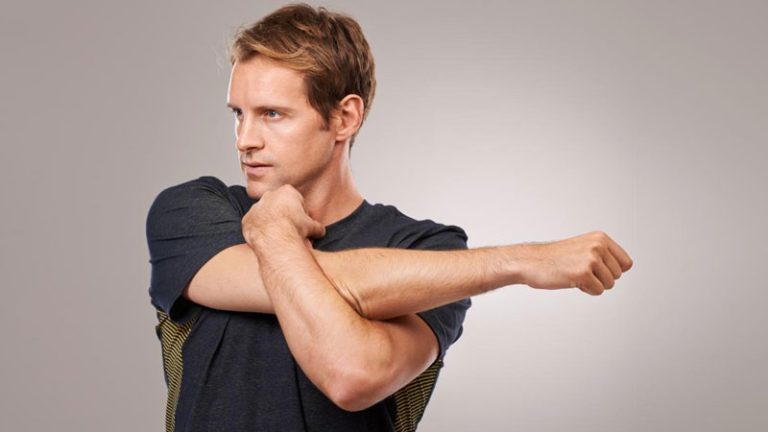
Start with your feet shoulder-width apart. Raise your right arm across your chest, placing the opposite hand on your right elbow.
Move your right wrist toward your left thumb, pointing your thumb upward.
Rotate your torso to the left. Tug on your right elbow. Hold for 30 seconds.
Hold your left elbow with your right hand. Turn your torso to the right and hold for 30 seconds.
Repeat 2 to 5 times.

Key takeaways
If you play golf, use these stretches as a warmup and cool down. You could also warm up by taking a few light swings.

In addition to regular stretching, applying ice and taking rest days can help manage pain.

Seek medical help if your pain lasts for more than 2 to 3 days or if you feel sudden, sharp pain during a game.

Jon Rahm's Daily Movement Prep

Jon Rahm’s Daily Movement Prep


Hello everyone, I'm Jon Rahm, and this is my trainer Spencer Tatum. We're going to go through one of my favorite warm-ups that I do before every round. I do it almost every day, and it basically consists of warming up your core and glutes — the king and queen muscles in the golf swing.

On those days when we're all sitting at home a lot, these are the first two muscles that are going to go, so getting your core and abs activated is going to be very important. Spencer is going to guide me through it and explain what we're doing, and I'm going to give you my personal input on what I feel. The one thing you will need is an iron — try to get a long iron. I have a five iron here, and you're going to be using it throughout the whole exercise.

This warm-up helps not only with John's mobility and stability, but also prepares him to play. It can also be used as a strength warm-up on the road. So if you're at home sitting around a lot, you've likely got really tight hip flexors — especially if you've been playing Xbox — and this is going to help get everything back aligned before you get back to swinging your golf club or getting into training sessions
We're starting with John lying down on his back. 

As you can see, he has his five iron, and what he's really trying to feel is that pelvic tilt — pushing into the ground. He's going to take the club, apply a little bit of pressure to engage his core, and hold it. He's going to breathe in and push down the whole time, holding that midline as he comes back up. We're building stability in the core while also working mobility in the hips.

John is going to demonstrate about three reps here. As you can see, he's really focused on keeping pressure in both the upper and lower body while maintaining that stability. After that, he's going to move to a bridge — a core activation bridge, still using the five iron. The same concepts apply. He's going to hold that midline, create pressure, and focus on breathing as he extends that hip. 

A lot of people are going to want to arch the lower back — make sure you're really holding it and driving into the ground as you extend that hip. John is going to do three reps. Notice the pressure and the breathing — breathing out at the top, breathing in on the way down. This is really working single-leg strength in the lower body, hip mobility, and core stability up top.

Now we're going to start working on some thoracic spine mobility. John is going to start here and move right to left, with his feet going in the opposite direction of the club. He's really focused on that separation — how far can he go each way — while making sure his back doesn't arch, keeping his knees in line with his hips, and breathing out on the movement and in on the transition.

We really like this for creating separation in the golf swing and mobilizing the thoracic spine to get ready to play. This might actually be my favorite exercise. It's very important to focus on the timing — try to have your legs reach their limit at the same time as your upper body and club. If you're out of sequence, you won't be getting the full benefit of what we're trying to accomplish. It also helps with timing and sequencing in your golf swing.

Next is the hollow body position. This one I don't personally love, but it really helps lock in the midline. The key thing we don't want is a reverse spine angle or early extension. John is really focused on creating pressure with his top hand and lat, pushing down and compressing, breathing in and trying to stay as long as possible without losing that midline.

As he breathes in and out, he should feel tension throughout, and he shouldn't be losing that position. Notice the amount of pressure he's applying — it's a lot. Working that compression force is very important. If you lose it, the arm gets loose and you may arch your back. If you keep this pressure going continuously throughout the whole exercise, it's very hard to arch, especially when you're using that hip and pushing into the hand. We'll do the other side to stay balanced three to five reps — and what you're really trying to do is feel that connection from the opposite shoulder to the opposite hip.

Now we're going to move on to straight-leg sit-ups. Really focus on rolling down vertebra by vertebra, and coming back up the same way. Try to keep your arms above your head at all times. I'm pulsing a little bit the stronger you are, the easier it will be. Try to keep your arms straight without using them to get up. This is a great way to build that connection, warm up the body, and prepare for hip hinging, which is important for your setup. We usually do somewhere between 8 and 10 reps, or however many it takes until you feel warmed up.

Now we're going to start working up the chain. Notice how we started on the back — just like how we learn to move, we're warming up in that same progression. Now we move into a half-kneeling position. On this exercise, you start by relaxing back into your hip, put a little pressure down on the club, and then drive through and extend that hip to create balance on the midline. If you do it properly, you should feel a stretch in the hip while pressing down on the club, and you'll feel that connection from your shoulder all the way down to your knee. Hold it for about two seconds, and do about five reps on each side.

Notice how we're working on what we call the rack and stack John is racking it up and stacking straight up. We don't want to see him leaning back and losing that position. All the previous warm-up work is going to help here. If your core is activated and working properly, you won't lose your back position — your abs will keep you feeling like a straight plank. Do three more reps here, pushing down first and then driving that hip through to get that nice stacked feeling. It's actually very similar to a dead bug if you do it one-handed, you'll feel that same compression and connection.

Now we've worked through the transition period and we're moving to standing — specifically single-leg RDLs. This is not my favorite exercise. It's hard to maintain balance throughout, and I struggle with it if I haven't warmed up properly or haven't trained in a while. Try to keep your arm extended, maintain pressure between your leg and your arm, and perform a normal RDL. Try to reach parallel if you can, but never lose that pressure between your arm and your leg.

Notice how he's really working through the feet — gripping the toes into the ground to anchor the foot down. This helps prevent sway and slide in the golf swing. We're also working on loading the right and left hip, getting into that position so we can drive through the ball.

Not everyone works out every day, and not everyone has the stability for this right away — just work on it. If you fall a couple of times, don't worry about it. Focus on how your body is warming up, and don't stress too much about the RDLs if they're too technical. Just work your way up to it.

Now all the joints are involved, so we're working at a higher level. The last thing we're going to work on is a two-legged hip hinge to get ready to swing the golf club. For those who know, it's almost like presetting for a deadlift — but try to keep your elbows open, not closed, and keep the club touching your body as much as possible as you hinge.

What we're looking for is whether John can keep his head, shoulder blades, and glutes all connected to the club while putting force into the ground and loading the hips. Notice how his shin angle stays nice and vertical — he's not falling back and losing power, and he's not squatting too deep either. This is a challenging pattern. It looks simple, but it's much harder than it appears. 

Try switching hands as well. As soon as you feel the club leaving your body — if you start bending the upper body without hinging — you'll see the club is no longer touching your spine. That means you've gone too far, so bring it back. Now John, how important is breathing during this? It's important for keeping your tempo. You're not going to hit the ball while inhaling, so you need to work on that. 

Essentially, you inhale and hold your breath during the challenging part, and when you need to explode, that's when you exhale. So to put it simply — breathe in for stability, hold your breath during transitional periods, and breathe out when you're generating mobility and power. Breathe in, hold, and exhale hard at the top.

It's a very simple warm-up — all you need is a five iron and a mat if you're on a hard surface. This should get you ready to go. It's something everybody can do, especially now that so many of us are sitting down a lot. At the very least, it'll help prevent back pain and get your muscles working properly.

If you find one area that needs more attention, remember three to five reps on each side or each movement. If after three to five reps you don't feel like you've got it, do two or three more until you do. If it feels easy, do three and move on. It's more about the feeling and quality of movement than the volume. You can do this one to three times a day and you'll see a major improvement in your mobility and stability, which will hopefully translate into a better golf swing. 

Stay positive, stay home, wash your hands, and let's hope we can get through this with a positive attitude — and improve your golf game while we're at it. This is Jon Rahm and Spencer Tatum. We'll see you soon.
Shoulder-Stretch

4 Stretches You Should Do Before Golfing

It’s crazy how fast a game of golf can turn around. All it takes is a hole in one or an under-par hole to fix your score.

On the other hand, one wrong move can mess up your whole game. This isn’t always in terms of your score, either.

Imagine setting up to hit the first swing on a new hole only to hurt your back, or not being able to put your best shot because you have pain in your wrist.

These are just a few reasons why it’s so important to make golf stretches a part of your routine. A few simple movements before stepping out on the course can transform your whole game.

Here are 4 stretches for golf you should do every time you’re about to play.

1. Hamstring Stretch

Golf is all about the swing, but the best swings are a combination of upper and lower body strength. As such, you need to give your legs just as much love and care as you do your back and shoulders, particularly in your hamstrings.

One of the best ways to stretch this muscle is to do a forward fold. You can bend your knees slightly if you’re not too flexible in order to get more of a release. It helps to step your feet apart a bit instead of having them touch, and, this stretch actually releases tension in your lower back, too.

2. Back Stretch

Speaking of releasing back tension, try getting on the ground and doing a twist. Lay on your back and twist one leg over the other, and then look to the opposite side. So, if you’re twisting your right leg toward the left, you want to face the right with your arms sticking straight out like a letter “T.”

You should immediately feel the stretch in your spine even if your knee doesn’t touch the ground. You might even get a nice little crack out of this stretch.

3. Shoulder Stretch

Once the back is warmed up a bit, you can focus on the shoulders. Stand up and find a flat wall to lean up against (not a textured brick or round column).

Face the wall and stick one of your arms out to the side so it’s perpendicular to the rest of your body. Stand as close to the wall as possible and place your arm and palm flatly against the wall. Then, turn your head to the opposite side and start to lean back a bit to put pressure on the arm on the wall.

Repeat on the other side, and then do some circles with your shoulders in both directions (clockwise and counterclockwise).

4. Wrist Stretch

The final stretch worth doing before a round of golf is a wrist stretch.

This is the easiest one on the list. All you have to do is hold one hand out in front of you with the palm facing up. Then, turn your fingers down toward the ground with your palm still up, and use your other hand to push your fingers in your direction. Push gently at first, and then build up more pressure for a deeper stretch.

More Golf Stretches and Other Things to Improve Your Game

It’s incredible how much your game improves when you start making golf stretches a part of your routine. Usually, it’s small adjustments like this that make the biggest difference.