Source: Getty Images

Spaun birdies last two to win US Open from MacIntyre

US Open final leaderboard

-1 Spaun (US); +1 MacIntyre (Sco); +2 Hovland (Nor); +3 Hatton (Eng); Young (US), Ortiz (Mex), +4 Burns (US), Scheffler (US) Rahm (Spa); +5 Griffin (US), Henley (US)

American JJ Spaun overcame a flooded golf course, a 90-minute rain delay and the brilliance of Scotland’s Robert MacIntyre to win the US Open on a chaotic final day at Oakmont Country Club.

The 34-year-old, who needed a par on the last to win his first major, holed an incredible 64-foot birdie putt to win by two on one under.

MacIntyre, watching on a television, applauded and simply mouthed “wow” when the putt dropped. It was a terrific gesture at the end of an enthralling final round.

The 28-year-old from Oban had gone close to breaking his own major duck at a course that is generally regarded as the toughest in the world.

He started the day seven off the lead and was the only player from the overnight top-10 to break par in the final round. His sensational two-under 68 set the clubhouse target at one over par.

But Spaun birdied the 17th to get to level par and then produced his moment of magic on the final green to send the drenched masses surround the putting surface wild.

It was quite the turnaround by the Californian, who started the round one shot behind overnight leader Sam Burns, and bogeyed five of his first six holes to seemingly drop out of contention.

However, after torrential rain stopped play for an hour and a half, Spaun regained his composure to follow a front nine of 40 shots with a back nine of 32.

“I never thought I would be here holding this trophy,” he said.

“I’ve always had aspirations and dreams but a few months ago I didn’t know what my ceiling was and how good I could be.”

While Spaun was climbing the leaderboard, the others’ ragged play added to the drama.

Burns, who had led after rounds two and three, drowned in the rain, alongside playing partner Adam Scott. They endured nightmare rounds of eight and nine over par, respectively, to finish well off the pace.

At one stage on the back nine, five players shared the lead at one over par, including England’s Tyrrell Hatton who played outstandingly for 16 holes but stumbled at the 17th and finished four back.

Four bogeys on the front nine derailed Norway’s Viktor Hovland but a level-par closing nine saw him home in 73 to claim third place on three over.

“I missed three five-foot putts and you can’t be doing that if you’re going to win a major championship,” said the European Ryder Cup player.

Back in March, JJ Spaun was inches from landing a 31-foot birdie on the 18th hole to beat Rory McIlroy at The Players Championship. He was then defeated by the Northern Irishman in a play-off.

At the US Open, he went one better – from twice the distance – and he celebrated wildly before succumbing to his tears.

The putt ensured he was the only player to navigate 72 holes at brutal Oakmont Country Club under par – a fitting finish for the sole man to shoot a bogey-free round this week with his stunning 66 on Thursday.

And yet his final round was littered with bad breaks – and bogeys.

A horror start seemed to have cost him his chance at a career-changing title – his approach at the second hitting the flagpole before rolling 50 yards away, and then bouncing his ball off a rake at the fourth on his way to five bogeys in six holes.

But, while almost everyone else was speeding down the leaderboard, he showed remarkable composure after the rain break to haul himself back into contention.

Birdie putts from 40 and 22 feet lifted him into the lead, and after a bogey at the 15th, his stellar tee shot that found the green at the par-four 17th helped him secure another birdie. And the second-best putter in the field by strokes gained sealed matters in style at the last.

“The weather delay changed the whole vibe for the day,” he said.

“A similar thing happened to me at the Players and I kind of leaned on that whole experience.”

Credits: Golf Digest

2024 Presidents Cup teams: Ranking all 24 golfers on United States, International sides at Royal Montreal

The Americans have the best players, but the International side has more experience … which will win out?

The President’s Cup often struggles to receive the same attention as the biennial Ryder Cup, but it nevertheless makes for some fun (if historically one-sided) team golf. The United States has won nine of these events consecutively, and while this year’s team is especially vulnerable, taking an overall look at the 24 golfers competing in Canada explains why the red, white and blue are on such a streak in this event.

The U.S. has traditionally overwhelmed the International team with talent. This year is no different, and there are both recent statistics and historical performances to prove it. A thorough breakdown of all 24 golfers playing in the Presidents Cup shows that the Americans bring far less experience into the fray, though the performances of those who have played prior Presidents Cups reign.

Let’s jump right in and rank all 24 players in this year’s event starting with the clear-cut two best players in the world in 2024.

2024 Presidents Cup teams, rankings

Xander Schauffele (USA): I have Schauffele ahead of Scheffler, mostly because Scheffler is 0-5-3 since his first team event at the 2021 Ryder Cup at Whistling Straits. Schauffele has been excellent at Presidents Cups in general with a 6-3-0 record, and his last three and six months are close enough to Scheffler that he gets the edge here.

Scottie Scheffler (USA): His Presidents Cup performance is one of the storylines I’ll be following the closest this week. As good as he’s been on his own over the last few years, he’s equally struggled at these team events. Part of the reason, I suspect, is that one of his greatest skills — mitigation of massive numbers in his rounds — does not matter at all in match play. That doesn’t mean he cannot be great — he could still easily go out and go 5-0-0 — but at the very least it’s something to keep an eye on.

Collin Morikawa (USA): Over the last six months, there are four golfers who have averaged 2.0 strokes gained or higher. Two of them are Scheffler and Schauffele, and the other two are Morikawa (2.22) and Hideki Matsuyama (2.03). Morikawa is perfect for any format and should finally get the only thing he lacked throughout what was a tremendous year: a victory.

Hideki Matsuyama (International): On paper, Matsuyama is the International team’s best player and has had the best year. Also on paper, Matsuyama is 7-10-5 at Presidents Cups. Still, it would have been foolish to rank someone who has clearly been one of the four best players in this field over the last six months lower than fourth. He’s the only International player who makes my top five.

Patrick Cantlay (USA): Now we start to go off the board just a bit. Cantlay has not been bad this year, but he’s had a down year for Patrick Cantlay. He ranks sixth in strokes gained of players in this field over the last six months, but I’m leaning on team event experience and success at this event in general — he’s 6-3-0 — not to mention a built-in partnership with the No. 1 player on this list.

Adam Scott (International): This could go one of two ways. Scott has been arguably the third-best player in the world since July. But we’re also talking about a 44-year-old whose 18-25-6 record is not all that great historically speaking. Can the International team depend on him or will he wear out after a long week? The answer to that question could legitimately decide this event.

Tony Finau (USA): The best value and most underrated player in this event. Finau has a better strokes gained number than all but three of the International team’s players over the last six months, he’s 3-2-3 in President’s Cup matches and has finished in the top 20 in nine of his last 10 tournaments.

Sungjae Im (International): Great Presidents Cup record and he’s playing great in general of late, ranking No. 3 overall in strokes gained over the last three months behind only Scheffler and Schauffele. My problem with Im? I don’t know that I can trust him. He never wins, and I’m concerned about him if it gets close late in the matches. Maybe that’s unfair, but when your winning percentage on the PGA Tour is around 1%, well, I don’t know what other options I have.

Russell Henley (USA): I said Cantlay is the first player I had to reorder based on strokes gained over the last six months. That’s because Henley ranks fifth in that category behind Scheffler, Schauffele, Morikawa and Matsuyama. I’m fascinated to see what he does in a team event because the argument could be made that he’s the most underrated stroke play golfer in the world.

Sam Burns (USA): Tried to carry Scheffler around Quail Hollow in 2022 but still stumbled to an 0-3-2 mark in his first President’s Cup. Burns had a nice FedEx Cup Playoffs and has been the sixth-best American in strokes gained over the last three months. Also, that’s seven Americans in the top 10, which is why the International team has not won since 1998.

Sahith Theegala (USA): The new Jordan Spieth for the U.S. side. Not from an emotional perspective but definitely from a stylistic standpoint. You might get three out-of-bounds shots off the tee, but you’re also maybe getting eight birdies over the last 13 holes. Electricity.

Wyndham Clark (USA): The 2023 U.S. Open champion is where this can turn into a rout for the U.S. side. If the Americans are getting, say, a 2-0-1 performance from Clark, that’s probably an early wrap. Clark has been way up and way down in 2024 but ended the year in a nice note in the FedEx Cup Playoffs.

Tom Kim (International): He was arguably the star of the 2022 President’s Cup, even though he only went 2-3-0 in his five matches. Kim has struggled of late and failed to make it past the first round of the FedEx Cup Playoffs. He might be a match play king tantamount to an Ian Poulter or someone like that, but I’m going to have to see it a few more times before I start handing out that title to him.

Si Woo Kim (International): Like Clark on the U.S. side, if the International team is getting three points out of someone like Kim, then the U.S. could be in some trouble.

Taylor Pendrith (International): Our first Canadian! The home country boy went a putrid 0-4-0 at Quail Hollow. If that happens again, then the International team has no chance. He is trending in the right direction, though, with his three-month SG number improving from his six-month number.

Jason Day (International): His record at President’s Cups is a terrible 5-11-4. Good year, but when he’s one of your top six or seven guys, that’s a problem.

Brian Harman (USA): Solid play but nothing spectacular this year. Emblematic of that is that he only missed two cuts but also only had two top fives. If the U.S. gets two points out of him, that’s a good thing.

Keegan Bradley (USA): I’m curious to see how much they play him. His win at the BMW was great, but it’s his only top 10 since May, and he will be paying particular attention to how the entire event (and specifically the U.S. team) operates ahead of his Ryder Cup captaincy.

Mackenzie Hughes (International): His numbers are good but not great, but with the way he putts — at least 0.4 strokes gained per round every season for the last five — he could be a nightmare to face in match play.

Min Woo Lee (International): I want to have Lee higher here, but his golf has been pretty bad over the last three and six months. He only has one top 10 since March, and it came at the Rocket Mortgage Classic.

Ben An (International): I don’t have any strong opinion one way or another on An. A good year, but I don’t expect anything special from him this week.

Max Homa (USA): If he wasn’t bringing so many intangibles to the table, Homa would be an easy 24th here. He’s the only player with a negative strokes gained number over the last three months, and it’s 0.74. Next worst is Lee at 0.44, which means Homa has been over one stroke worse than the next worst player in this event over the last three months.

Corey Conners (International): Another guy who went 0-4-0 at Quail Hollow. Even though he’s an excellent striker of the ball, I do not love Conners’ game and disposition for this event.

Christiaan Bezuidenhout (International): He played poorly over the last three months, although like Hughes, he could be tough to face because his short game is nasty

6ce34ee0-6e2b-11ef-8d25-7777cae52d72 (1)

Europe warned to expect hostile Solheim Cup atmosphere

Europe will face a “hostile” home crowd “absolutely desperate” for the United States to win back the Solheim Cup in Virginia this week, says former captain Mickey Walker.

Last year’s 14-14 draw in Spain, the first in the contest’s 34-year history, meant Europe retained the trophy after victories in 2019 in Scotland and 2021 in Ohio.

No side has held the trophy for a fourth successive time and Europe have won just twice in nine previous events in the US.

“The Americans will feel it is essential to win and it’s going to be difficult for Europe because it can get quite hostile,” Walker, who led Europe to their first triumph in 1992.

“The American crowds will be out there to win it. It will be very pro-American and that will be really tough.

“Those that have played before will know what to expect and they will be as prepared as they can be, but it’s a lonely place when you’re out there playing and 90% of the support is American.”

skysports-scottie-scheffler_6670681

PGA Tour: Scottie Scheffler builds big lead over Xander Schauffele at season-ending Tour Championship

World No 1 Scottie Scheffler seven clear of Xander Schauffele and Collin Morikawa at the Tour Championship; Scheffler looking to win the FedExCup for the first time

Scottie Scheffler made a dream start to his bid for a maiden FedExCup victory after surging into a seven-shot lead following the opening round of the PGA Tour’s season-ending Tour Championship.

The world No 1 has already won six times on the PGA Tour this season and arrived at East Lake with a two-shot cushion over closest challenger Xander Schauffele, with Scheffler recovering from a bogey start to take early control of the tournament.

Scheffler fired seven birdies – including five in his last seven holes – to close a round-of-the-day 65 and jump to 16 under, making the 28-year-old the overwhelming favourite to win the season finale and claim the $25m jackpot.

Schauffele’s one-under 70 leaves him tied-second alongside Collin Morikawa, who started his back nine with six consecutive birdies, with Hideki Matsuyama and Keegan Bradley – the winners of the first two Playoff events – in the group sharing fourth on eight under.

Scheffler’s two-shot pre-tournament advantage temporarily disappeared at the par-four first, where he failed to get up and down from short of the green to save par and Schauffele holed an eight-foot birdie to move to nine under.

The FedExCup leader edged back ahead with a close-range birdie at the third but missed a chance from inside 10 feet to double his cushion at the fifth, allowing Schauffele to pull back level when he set up a close-range birdie at the par-five sixth.

Scheffler responded by rolling in a 35-footer at the seventh to regain the solo advantage and reach the turn one ahead, although he only stayed in front when Schauffele squandered an eight-foot birdie opportunity at the par-four 10th.

Schauffele failed to convert from six feet to save par at the 11th and quickly fell further behind, as Scheffler posted back-to-back birdies from the 12th to jump to 13 under and four clear of the field.

Scheffler missed his eagle attempt from 20 feet at the par-five 14th but tapped in for a third straight birdie, as Schauffele holed from 15 feet to also pick up a shot before bogeying the 16th to drop five strokes adrift.

The lead increased further when Scheffler added a 15-foot birdie at the par-four 17th, before a brilliant up and down from the greenside bunker saw him take advantage of par-five last and build the biggest opening-round lead since starting strokes were implemented at the Tour Championship in 2019.

“Yeah, I’m pleased with the day,” Scheffler told Sky Sports. “I tried not to think about any sort of lead or anything like that, my job was to go out there and execute and I felt like I did a really good job of that. I felt like I was doing some good stuff to start the day. I had the bogey on one but after that I felt like I played some really good golf.”

Schauffele mixed three birdies with two bogeys in a frustrating opening round, with Morikawa’s 66 initially equalling the lowest score of the day until Scheffler’s late birdie run.

Matsuyama and Bradley are joined eight back by Adam Scott, Sam Burns and Wyndham Clark, with Sahith Theegala jumping to ninth after five birdies in the last six holes.

Rory McIlroy’s bid for record fourth FedExCup victory required three birdies in the last five holes to salvage a two-under 69, leaving him 10 strokes back, with defending champion Viktor Hovland on four under and tied-20th despite making seven birdies in his opening-round 69.

Source : Getty Images

McIlroy grouped with Scheffler & Schauffele at US Open

Rory McIlroy will play alongside Scottie Scheffler and Xander Schauffele in an eye-catching group during the first two rounds of the US Open at Pinehurst.

The world’s top three players will tee off at 18:14 BST on Thursday.

World number three McIlroy, the 2011 US Open champion, top-ranked Scheffler and Schauffele, who replaced McIlroy in second spot after winning last month’s US PGA Championship, also played alongside each other at the Masters – won by Scheffler – in April.

Three-time winner Tiger Woods tees off alongside Will Zalatoris and England’s 2022 champion Matt Fitzpatrick at 12:29 on Thursday.

Wyndham Clark, who edged out McIlroy last year, begins his title defence alongside Open champion Brian Harman and 2023 US Amateur winner Nick Dunlap at 18:25.

World number eight Jon Rahm, who won this title in 2021, is due out at 18:36 on Thursday with Japan’s 2021 Masters winner Hideki Matsuyama and 2015 US Open champion Jordan Spieth.

On Tuesday, Spain’s Rahm cast doubt over his participation because of a foot injury.

US Open tee times (times BST)

Round one: Thursday, 13 June

Starting at hole one (a denotes amateur)

11:45: Carter Jenkins (US), Logan McAllister (US), Michael McGowan (US)

11:56: (a) Parker Bell (US), Frederik Kjettrup (Den), Christopher Petefish (US)

12:07: Max Greyserman (US), Casey Jarvis (SA), (a) Omar Morales (Mex)

12:18: Corey Conners (Can), Emiliano Grillo (Arg), Stephan Jaeger (Ger)

12:29: Sergio Garcia (Spa), Ryo Ishikawa (Jpn), Francesco Molinari (Ita)

12:40: Brooks Koepka (US), Collin Morikawa (US), Justin Thomas (US)

12:51: Rickie Fowler (US), Adam Hadwin (Can), Phil Mickelson (US)

13:02: Nicolai Hojgaard (Den), Min-Woo Lee (Aus), Sahith Theegala (US)

13:13: Sung-Jae Im (Kor), Si-Woo Kim (Kor), Matthieu Pavon (Fra)

13:24: Nicolas Echavarria (Col), Robert Rock (Eng), (a) Neal Shipley (US)

13:35: (a) Stewart Hagestad (US), Takumi Kanaya (Jpn), Mac Meissner (US)

13:46: Jim Herman, (a) Bryan Kim US), Isaiah Salinda (US)

13:57: (a) Colin Prater (US), Charles Reiter (US), Carson Schaake (US)

17:30: Brandon Thompson (Eng), Jason Scrivener (Aus), (a) Brendan Valdes (US)

17:41: Sam Bairstow (Eng), (a) Santiago De la Fuente (Mex), Eugenio Lopez-Chacarra (Spa)

17:52: Christiaan Bezuidenhout (SA), Kurt Kitayama (US), Taylor Moore (US)

18:03: Jason Day (Aus), Harris English (US), Joo-Hyung Kim (Kor)

18:14: Rory McIlroy (NI), Xander Schauffele (US), Scottie Scheffler (US)

18:25: Wyndham Clark (US), Nick Dunlap (US), Brian Harman (US)

18:36: Hideki Matsuyama (Jpn), Jon Rahm (Spa), Jordan Spieth (US)

18:47: Keegan Bradley (US), Martin Kaymer (Ger), Shane Lowry (Ire)

18:58: Akshay Bhatia (US), Eric Cole (US), Erik van Rooyen (SA)

19:09: Alexander Noren (Swe), Taylor Pendrith (Can), Brendon Todd (US)

19:20: (a) Jackson Buchanan (US), Brian Campbell (US), Thomas Detry (Bel)

19:31: (a) Gunnar Broin (US), Maxwell Moldovan (US), Taisei Shimuzu (Jpn)

19:42: John Chin (US), Sung-Hoon Kang (Kor), Riki Kawamoto (Jpn)

Starting at hole 10

11:45: Rico Hoey (Phi), Matteo Manassero (Ita), Tom McKibbin (NI)

11:56: Dean Burmester (SA), Rikuya Hoshino (Jpn), Seamus Power (Ire)

12:07: Seong-Hyeon Kim (Kor), Justin Lower (US), Tim Widing (Swe)

12:18: Sam Burns (US), Lucas Glover (US), Cameron Smith (Aus)

12:29: Matthew Fitzpatrick (Eng), Tiger Woods (US), Will Zalatoris (US)

12:40: Patrick Cantlay (US), Russell Henley (US), Matt Kuchar (US)

12:51: Ludvig Aberg (Swe), Tony Finau (US), Dustin Johnson (US)

13:02: Justin Rose (Eng), Webb Simpson (US), Gary Woodland (US)

13:13: Daniel Berger (US), Ryan Fox (NZ), David Puig (Spa)

13:24: Byeong-Hun An (Kor), Sam Bennett (US), Edoardo Molinari (Ita)

13:35: Cameron Davis (Aus), Austin Eckroat (US), Adrian Meronk (Pol)

13:46: Zachary Blair (US), Aaron Rai (Eng), Davis Thompson (US)

13:57: Willie Mack III (US), Richard Mansell (Eng), (a) Ashton McCulloch (Can)

17:30: Grant Forrest (Sco), Greyson Sigg, (a) Wells Williams (US)

17:41: Chesson Hadley (US), Mark Hubbard (US), Adam Svensson (Can)

17:52: Beau Hossler (US), Victor Perez (Fra), Adam Schenk (US)

18:03: Mackenzie Hughes (Can), Robert MacIntyre (Sco), Nick Taylor (Can)

18:14: Tommy Fleetwood (Eng), Tyrrell Hatton (Eng), Tom Hoge (US)

18:25: Bryson DeChambeau (US), Max Homa (US), Viktor Hovland (Nor)

18:36: Peter Malnati (US), J. T. Poston (US), Sepp Straka (Aut)

18:47: Jake Knapp (US), (a) Gordon Sargent (US), Cameron Young (US)

18:58: Billy Horschel (US), Chris Kirk (US), Adam Scott (Aus)

19:09: (a) Benjamin James (US), Ben Kohles (US), Denny McCarthy (US)

19:20: Frankie Capan (US), (a) Luke Clanton (US), Andrew Svoboda (US)

19:31: Harry Higgs (US), (a) Hiroshi Tai (Sin), Brandon Wu (US)

19:42: Otto Black (US), Chris Naegel (US), Joey Vrzich (US)

Round two: Friday, 14 June

Starting at hole one

11:45: Grant Forrest (Sco), Greyson Sigg (US), (a) Wells Williams (US)

11:56: Chesson Hadley (US), Mark Hubbard (US), Adam Svensson (Can)

12:07: Beau Hossler (US), Victor Perez (Fra), Adam Schenk (US)

12:18: Mackenzie Hughes (Can), Robert MacIntyre (Sco), Nick Taylor (Can)

12:29: Tommy Fleetwood (Eng), Tyrrell Hatton (Eng), Tom Hoge (US)

12:40: Bryson DeChambeau (US), Max Homa (US), Viktor Hovland (Nor)

12:51: Peter Malnati (US), J. T. Poston (US), Sepp Straka (Aut)

13:02: Jake Knapp (US), (a) Gordon Sargent (US), Cameron Young (US)

13:13: Billy Horschel (US), Chris Kirk (US), Adam Scott (Aus)

13:24: (a) Benjamin James (US), Ben Kohles (US), Denny McCarthy (US)

13:35: Frankie Capan (US), (a) Luke Clanton (US), Andrew Svoboda (US)

13:46: Harry Higgs (US), (a) Hiroshi Tai (Sin), Brandon Wu (US)

13:57: Otto Black (US), Chris Naegel (US), Joey Vrzich (US)

17:30: Rico Hoey (Phi), Matteo Manassero (Ita), Tom McKibbin (NI)

17:41: Dean Burmester (SA), Rikuya Hoshino (Jpn), Seamus Power (Ire)

17:52: Seong-Hyeon Kim (Kor), Justin Lower (US), Tim Widing (Swe)

18:03: Sam Burns (US), Lucas Glover (US), Cameron Smith (Aus)

18:14: Matthew Fitzpatrick (Eng), Tiger Woods (US), Will Zalatoris (US)

18:25: Patrick Cantlay (US), Russell Henley (US), Matt Kuchar (US)

18:36: Ludvig Aberg (Swe), Tony Finau (US), Dustin Johnson (US)

18:47: Justin Rose (Eng), Webb Simpson (US), Gary Woodland (US)

18:58: Daniel Berger (US), Ryan Fox (NZ), David Puig (Spa)

19:09: Byeong-Hun An (Kor), Sam Bennett (US), Edoardo Molinari (Ita)

19:20: Cameron Davis (Aus), Austin Eckroat (US), Adrian Meronk (Pol)

19:31: Zachary Blair (US), Aaron Rai (Eng), Davis Thompson (US)

19:42: Willie Mack III (US), Richard Mansell (Eng), Ashton McCulloch (Can),

Starting at hole 10

11:45: Brandon Thompson (Eng), Jason Scrivener (Aus), (a) Brendan Valdes (US)

11:56: Sam Bairstow (Eng), (a) Santiago De la Fuente (Mex), Eugenio

Lopez-Chacarra (Spa)

12:07: Christiaan Bezuidenhout (SA), Kurt Kitayama (US), Taylor Moore (US)

12:18: Jason Day (Aus), Harris English (US), Joo-Hyung Kim (Kor)

12:29: Rory McIlroy (NI), Xander Schauffele (US), Scottie Scheffler (US)

12:40: Wyndham Clark (US), Nick Dunlap (US), Brian Harman (US)

12:51: Hideki Matsuyama (Jpn), Jon Rahm (Spa), Jordan Spieth (US)

13:02: Keegan Bradley (US), Martin Kaymer (Ger), Shane Lowry (Ire)

13:13: Akshay Bhatia (US), Eric Cole (US), Erik van Rooyen (SA)

13:24: Alexander Noren (Swe), Taylor Pendrith (Can), Brendon Todd (US)

13:35: (a) Jackson Buchanan (US), Brian Campbell (US), Thomas Detry (Bel)

13:46: (a) Gunnar Broin (US), Maxwell Moldovan (US), Taisei Shimuzu (Jpn)

13:57: John Chin (US), Sung-Hoon Kang (Kor), Riki Kawamoto (Jpn)

17:30: Carter Jenkins (US), Logan McAllister (US), Michael McGowan (US)

17:41: (a) Parker Bell (US), Frederik Kjettrup (Den), Christopher Petefish (US)

17:52: Max Greyserman (US), Casey Jarvis (SA), (a) Omar Morales (Mex)

18:03: Corey Conners (Can), Emiliano Grillo (Arg), Stephan Jaeger (Ger)

18:14: Sergio Garcia (Spa), Ryo Ishikawa (Jpn), Francesco Molinari (Ita)

18:25: Brooks Koepka (US), Collin Morikawa (US), Justin Thomas (US)

18:36: Rickie Fowler (US), Adam Hadwin (Can), Phil Mickelson (US)

18:47: Nicolai Hojgaard (Den), Min-Woo Lee (Aus), Sahith Theegala (US)

18:58: Sung-Jae Im (Kor), Si-Woo Kim (Kor), Matthieu Pavon (Fra)

19:09: Nicolas Echavarria (Col), Robert Rock (Eng), (a) Neal Shipley (US)

19:20: (a) Stewart Hagestad (US), Takumi Kanaya (Jpn), Mac Meissner (US)

19:31: Jim Herman (US), Bryan Kim (US), Isaiah Salinda (US)

19:42: (a) Colin Prater (US), Charles Reiter (US), Carson Schaake (US)

Untitled-1

The 10 best golf trips to take in 2024

Planning a golf trip is about more than just booking a tee time. The best destinations combine world-class courses, unforgettable scenery, and a full resort experience. From legendary links in Scotland to dramatic oceanfront layouts in California, these golf trips should be on every golfer’s travel list for 2024.

Below are ten of the best golf destinations worth building a trip around.

1. St Andrews, Scotland

Often called the “Home of Golf,” St Andrews is the ultimate pilgrimage for golfers. The Old Course has hosted the game’s biggest championships for centuries and features iconic landmarks like the Swilcan Bridge and Hell Bunker.

Beyond the Old Course, the town offers multiple outstanding layouts, including the New Course and Castle Course. Add historic pubs, seaside views, and deep golf tradition, and it becomes one of the sport’s most meaningful travel experiences.

2. Pebble Beach, California

Few golf trips are as famous as Pebble Beach. The course hugs the Pacific Ocean, delivering some of the most photographed holes in golf, including the par-3 7th and the dramatic par-5 18th.

The resort includes several courses, such as Spyglass Hill and Spanish Bay, along with luxury accommodations and the scenic 17-Mile Drive. It’s expensive, but for many golfers it’s the ultimate bucket-list round.

3. Bandon Dunes, Oregon

Bandon Dunes has become one of the most celebrated golf resorts in the world. Set along the rugged Oregon coastline, the resort features multiple links-style courses, including Pacific Dunes, Bandon Trails, Old Macdonald, and Sheep Ranch.

The experience focuses on pure golf: walking courses, ocean views, and strong caddie programs. Many golfers consider it the closest American experience to traditional Scottish links golf.

4. Pinehurst, North Carolina

Pinehurst is often described as the “Home of American Golf.” The resort includes ten championship courses and a long history of major championships.

The centerpiece is Pinehurst No. 2, designed by Donald Ross and host of multiple U.S. Opens. With its historic village atmosphere and classic course designs, Pinehurst offers a complete golf destination.

5. Casa de Campo, Dominican Republic

For golfers who want sunshine and ocean views, Casa de Campo delivers a luxury Caribbean golf experience. The resort is home to Teeth of the Dog, a course consistently ranked among the best in the region.

Several holes play directly along the sea, combining spectacular scenery with challenging design. Off the course, the resort offers beaches, marinas, and high-end dining.

6. Cabot Cape Breton, Nova Scotia

Cabot Cape Breton has quickly become one of North America’s most exciting golf destinations. The property includes Cabot Cliffs and Cabot Links, both of which feature dramatic oceanfront holes.

The rugged coastline and remote location make the experience feel like a true golf escape. It’s ideal for travelers looking for world-class golf in a quiet, scenic setting.

7. Kohler, Wisconsin

Kohler is home to the Straits Course at Whistling Straits, a layout that has hosted major championships and the 2021 Ryder Cup. The course sits along Lake Michigan and is famous for its dramatic bunkering and windswept terrain.

The resort also offers several other courses, luxury lodging, and spa amenities, making it a top destination for group golf trips.

8. Streamsong, Florida

Streamsong offers one of the most unique golf experiences in the United States. Built on reclaimed mining land in central Florida, the resort features three highly ranked courses: Streamsong Red, Blue, and Black.

Each course was designed by a different architect, giving golfers a variety of playing styles within the same destination.

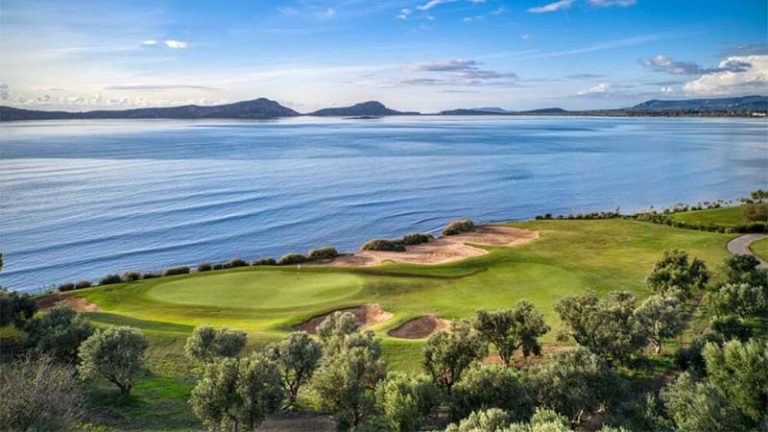
9. Costa Navarino, Greece

Costa Navarino has emerged as one of Europe’s premier golf destinations. Located on the Mediterranean coast, the resort offers several championship courses paired with luxury accommodations.

The combination of seaside landscapes, warm climate, and rich local culture makes it a great option for golfers seeking an international getaway.

10. Cape Kidnappers, New Zealand

For golfers willing to travel far, Cape Kidnappers delivers one of the most dramatic settings in the sport. The course sits atop towering cliffs overlooking the Pacific Ocean.

Fairways run along the edges of steep drop-offs, creating unforgettable views and thrilling golf. The surrounding Hawke’s Bay region also offers excellent food, wine, and natural scenery.

Why Golf Trips Remain Special

The best golf trips combine more than great courses. They create lasting memories through landscapes, camaraderie, and the chance to play the same holes that legends once walked.

From historic links in Scotland to coastal layouts in California and remote cliffs in New Zealand, these destinations represent some of the finest golf travel experiences available today.

Credits: Taylormade

TaylorMade Stealth drivers

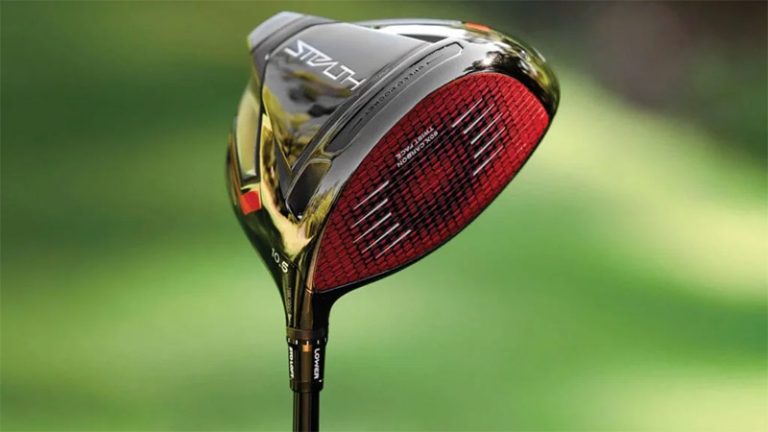
A carbon-composite face—not the crown or even the body as we’ve seen in various stages over the last 15 years or so, but the part of the club that makes contact with the ball—is the foundation for TaylorMade’s three new Stealth drivers. The trio includes the adjustable weight Stealth Plus; the higher-launching, higher-forgiving Stealth; and the high-launching and draw-biased Stealth HD. The face, made of 60 layers of carbon-composite fiber, is 40 percent lighter than a similarly sized titanium face to create a more efficient energy transfer and better ball speed consistency across the face.

TaylorMade believes the Stealth drivers, which include the sliding movable weight Stealth Plus; the high-launching, high-stability Stealth; and the slice-fighting Stealth HD, perform better with respect to those springlike effect properties and guidelines because the carbon-composite face is significantly lighter than a titanium face. The faces on the Stealth drivers weigh 26 grams compared to 43 grams were they made of titanium. It’s a complex bit of engineering theory, but the idea is that the lighter the face, the more efficient the collision because when there’s less mass taken up by the face, there’s more mass in the body. The problem for titanium is it can’t really get significantly lighter anymore, said Matt Johnson, TaylorMade’s principal engineer in its advanced design division.

“You could get thinner and thinner with titanium but then it becomes nonconforming so the only way to overcome that is to go to a new material,” he said, noting the new Stealth faces also are 20 percent larger than TaylorMade’s recent SIM drivers. “It needs to be appropriately stiff but as light as possible.” That makes carbon-composite fibers the great untapped alternative.

With their return to an all black crown, TaylorMade is back to making some of the best-looking drivers in golf. Elements of their last few generations still remain, primarily the large carbon crown, but the lack of different colors gives the Stealth driver a more traditional appearance. There is Stealth branding on the heel of the crown, but it lives up to its name by blending in almost completely.

As I noted in my two previous Stealth driver reviews, there is barely any difference between the three models at address. Each one is 460cc with a very slight pear shape. This allows golfers to buy based on performance rather than looks, which I applaud.

The most eye-catching piece of the Stealth driver is the red Carbon Twist Face. I like that it has a lot of visual “pop” without being distracting at address. Personally, I found the red dark enough that I barely noticed the difference when I set up.

The TaylorMade Stealth driver is really impressive. What stood out most was the consistency of ball speed. It took a really poor swing to drop my smash factor much below 1.45. With ball speed being the primary engine of distance, the importance of this can’t be overstated.

That consistent ball speed comes from the stability of the head and the technology in the face. Most obvious is the 60X Carbon Twist Face, named for the sixty layers of carbon fiber and the shape which helps keep off-center shots straighter. The other key element is the Asymmetric Inertia Generator – the large weight at the back of the head. This raises the MOI and keeps the head from twisting on mishits.

Higher forgiveness is one of the primary things that separates the Stealth driver from the Stealth Plus. Where the Stealth Plus has a Sliding Weight Track to dial in ball flight, the Stealth has a heavier Asymmetric Inertia Generator for more forgiveness. The difference isn’t night and day, but I found it noticeable and would definitely favor the Stealth for my own game.

The other important distinction among the three models is launch and spin. There’s a clear stair step progression from the Stealth Plus – the lowest launch and spin – to the Stealth to the Stealth HD. For me, all three are very playable, but the Stealth is a happy middle. Being a lower spin player, the Stealth HD’s launch and spin could work for me, but I prefer the neutral ball flight of the Stealth driver.

The TaylorMade Stealth driver is firmly in the conversation for driver of the year and has a real shot to earn a spot in my bag. The consistency of the ball speed is remarkable, and the Stealth also provides excellent stability. Don’t be surprised to regularly see this driver in the winner’s circle on Tour and in fittings this year.

gem2

Coefficient of Restitution (COR) in Golf Clubs

The coefficient of restitution, commonly known as COR, is one of the most important technical measurements used to evaluate the performance of golf clubs. It plays a major role in determining how efficiently energy is transferred from a clubface to a golf ball at impact. For golfers, this can directly affect ball speed, distance, and overall performance.

Although the term sounds highly technical, the concept is fairly simple. COR measures how “bouncy” a collision is between two objects. In golf, it describes how much energy is retained when the clubface strikes the ball. A higher COR means the collision is more efficient and less energy is lost, resulting in faster ball speeds and potentially longer shots.

Understanding COR helps golfers appreciate how modern equipment design influences performance and why golf’s governing bodies regulate certain limits.

What is the coefficient of restitution?

The coefficient of restitution is a physics-based measurement that ranges from 0 to 1.

  • 0 means a completely inelastic collision where all energy is lost.
  • 1 means a perfectly elastic collision where no energy is lost.

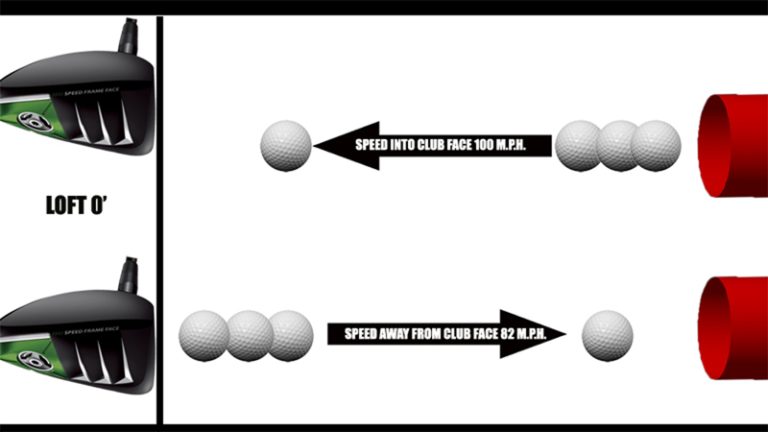
In golf, the collision between a clubface and a ball is somewhere between these two extremes. When a driver hits a golf ball, both the clubface and the ball compress momentarily. As they rebound, energy is transferred to the ball, sending it down the fairway.

COR measures the ratio of the ball’s speed after impact compared to the club’s speed before impact.

A higher COR means more energy is transferred to the ball, which usually results in higher ball speed and greater distance.

Why COR matters in golf performance

For golfers, COR is closely connected to distance potential. A club with a higher COR can launch the ball faster, assuming the same swing speed.

For example, if two golfers swing drivers at identical speeds but one club has a slightly higher COR, the ball struck by that club may travel farther due to increased ball speed.

This is why golf equipment manufacturers invest heavily in research and engineering to optimize the rebound effect of clubfaces.

However, COR alone does not determine performance. Other factors also play major roles, including:

  • clubhead design
  • loft
  • center of gravity placement
  • shaft flex
  • player swing mechanics

Even with the same COR rating, two clubs can perform differently depending on these design features.

COR limits set by golf’s governing bodies

To maintain fairness and prevent equipment from giving players an excessive advantage, golf’s governing bodies regulate COR.

The United States Golf Association (USGA) and The R&A established a maximum COR limit of 0.830 for drivers used in official competitions.

This means manufacturers cannot design drivers that exceed this rebound efficiency threshold.

The rule was introduced because technological advances in club design during the late 1990s and early 2000s began producing extremely thin, spring-like clubfaces that dramatically increased ball speed.

Without limits, golf equipment could have made courses significantly easier and changed the competitive balance of the sport.

Today, nearly all modern drivers are engineered to reach the legal maximum COR, often referred to as “pushing the limit.”

The trampoline effect

The phenomenon that allows drivers to approach the COR limit is commonly called the trampoline effect.

When the ball strikes the clubface, both surfaces compress slightly. The clubface then rebounds quickly, adding extra energy to the ball.

Manufacturers design clubfaces to flex just enough to maximize energy transfer while still remaining within legal COR limits.

Advanced materials and manufacturing techniques make this possible. These include:

  • titanium alloys
  • variable face thickness technology
  • precision milling
  • computer-assisted structural design

By carefully controlling how the face flexes, engineers can produce drivers that consistently deliver high ball speeds across larger portions of the clubface.

COR vs CT testing

While COR was historically the main measurement used to regulate club performance, modern testing often relies on Characteristic Time (CT) instead.

CT measures how long a steel pendulum stays in contact with the clubface during testing. This contact time is closely related to how much the face flexes and rebounds.

The USGA now uses CT testing because it is easier and more consistent to measure than COR.

Even though CT is the official testing method today, the golf industry still widely uses the term COR when discussing club performance.

How manufacturers optimise COR

Golf club manufacturers constantly seek ways to maximise COR while staying within legal limits. This involves sophisticated engineering and materials science.

One common strategy is variable face thickness. Instead of having a uniform thickness across the entire clubface, engineers design thinner sections in specific areas to allow more flex.

This helps maintain high ball speed even when the ball is struck slightly off-centre.

Another technique is multi-material construction, where different metals or composites are combined to control how the clubhead flexes during impact.

Artificial intelligence and computer simulations have also become important tools. Some manufacturers now use AI to analyze thousands of potential face designs to find the most efficient structures.

These technologies allow clubs to maintain high COR performance across a larger “sweet spot,” improving forgiveness for amateur golfers.

For most golfers, the concepts are closely related and essentially describe the same idea: how efficiently a clubface transfers energy to the ball.

Does COR affect irons and wedges?

COR is most commonly associated with drivers and fairway woods, where maximizing distance is a major design goal.

Irons and wedges, however, are typically designed with different priorities.

Many iron sets focus on control, launch angle, and spin characteristics rather than pure rebound efficiency. As a result, COR values for irons are usually lower than those for drivers.

Game-improvement irons may still incorporate thin faces and flexible designs to increase ball speed, but they are balanced with the need for precision and shot-shaping ability.

Wedges, meanwhile, emphasize spin and control around the greens, so COR plays a much smaller role in their design.

Misconceptions about COR

Many golfers assume that simply buying a club with a high COR will automatically increase their distance. In reality, equipment performance depends on many variables.

Swing speed, strike location, and launch conditions all influence the final result.

A driver that technically reaches the maximum COR limit may not perform well for a golfer if the loft or shaft does not match their swing.

Proper club fitting often has a greater impact on performance than small differences in COR.

Another misconception is that older clubs have significantly lower COR values. While modern technology has improved face design, many drivers from the past two decades already approach the legal limit.

The difference in performance often comes from forgiveness and adjustability rather than pure rebound efficiency.

The future of COR and golf equipment

Because COR limits are already tightly regulated, future improvements in golf club performance will likely come from other areas of design rather than higher rebound efficiency.

Manufacturers are focusing on:

  • larger sweet spots
  • improved aerodynamics
  • adjustable weighting systems
  • advanced materials
  • AI-driven clubface design

These innovations can help golfers achieve more consistent ball speed and better launch conditions even without increasing the COR beyond legal limits.

Conclusion

The coefficient of restitution is a fundamental concept in golf equipment design. It measures how efficiently energy is transferred from the clubface to the golf ball at impact, directly influencing ball speed and potential distance.

Although COR has a strict limit set by golf’s governing bodies, it remains an important benchmark for evaluating driver performance.

Modern golf clubs are carefully engineered to approach the legal COR threshold while improving forgiveness, consistency, and overall playability.

For golfers, understanding COR provides insight into how equipment works and why club design continues to evolve. However, the most important factor will always be the player’s swing. Even the most advanced driver cannot replace solid technique and proper fitting.

8

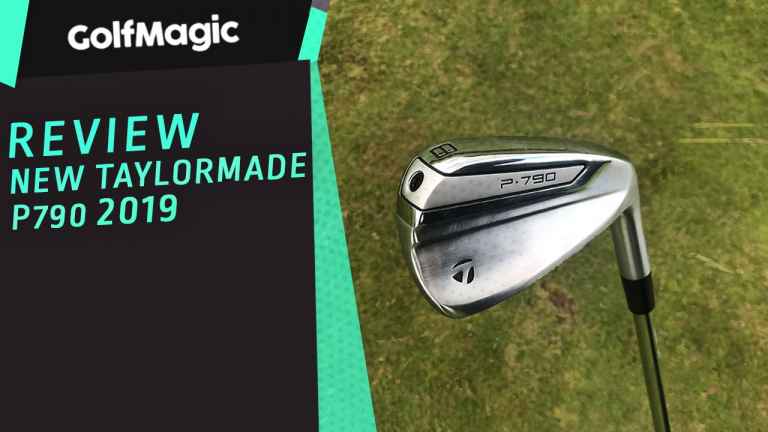
TAYLORMADE P790 2019 REVIEW

The previous TaylorMade P790 iron was a global success for the brand and was one of the best-selling clubs TaylorMade has ever produced. Due to its success, TaylorMade has launched a new generation of the P790, that are meticulously crafted to combine performance, feel and aesthetics. With some slight changes to both the build and design, the new P790 iron from TaylorMade still has that distinctive feel that you associate with the previous model and in our opinion is one of the best irons we have ever seen. Check out the video below as GolfMagic’s Jack Seddon puts the new P790 irons to the test at Farleigh Golf Club.

TECH

When building the new P790, TaylorMade wanted to improve the club but without drifting too far away from the unique elements that made the previous model so successful. The new 2019 model provides a forged iron with a medium-compact head design, with a refined topline, more compact blade length and reduced offset preferred by discerning players.

The all-new 2019 P·790 features a 7% thinner face designed to produce a faster COR and for the first time includes Progressive Inverted Cone Technology (PICT) designed to improve accuracy throughout the set, minimising the right tendency often found in the long irons. The thinner face also maintains sound and feel but enhances feedback regardless of where the ball is struck on the face.

Behind the face of the new P·790 is one of TaylorMade’s most advanced technologies to date: SpeedFoam, a proprietary construction which serves a dual purpose of generating ball speed as well as the management of sound and feel. Injected into the clubhead, SpeedFoam provides the face support and damping properties that make the performance of the P·790 unlike any other iron in the TaylorMade family.

Inside the P·790, a larger mass of tungsten – 15% more than first generation P·790 – has been reshaped to deliver a deeper centre of gravity. This was accomplished through the mass savings in the thinner face as well as by removing mass in the iron frame (high toe area) and repositioning it by way of the larger, low profile tungsten design. The new tungsten design helps to lower the CG and increase the launch angle of the new 2019 model.

LOOKS


The previous P790 model is widely regarded as one of the best looking irons on the market, but TaylorMade has raised the bar once again in the 2019 model. What I love most is the fact that it still looks like a P790 iron. There are so many elements of the previous model that made it so successful and the design was one of them, so to improve the aesthetics of the P790, but without taking away its distinctive look, is fantastic. The design team could have easily got ahead of themselves and started changing the new model to make it look a lot different, but they kept it recognisable, while still giving it a fresh new look. The shinier finish may be hard to see on the video, but if you compare the old iron with the new P790, the new shine element really makes the club stand out.

The new smaller logo also goes a long way. Similar to the TaylorMade P7TW irons, the small logo adds to the compact look of the club and makes the new P790 iron look a lot cleaner and modernised. The smaller and more compact construction of the new model will go down very well with the better players with a lower handicap, but it also won’t stop the higher handicap players from choosing them, as they’re still packed with all the performance aspects they need, in terms of distance and speed.

PERFORMANCE


The new P790 iron offered everything you expect to see in the previous model and more. A players iron that looks compact and clean, but provides you with distance, speed and forgiveness. The performance features of the previous model took the golf market by storm, due to the range of handicaps that can use these irons and I expect the new model to do that once again.

The new P790’s feel fantastic and provide a pure feel at impact, but what surprised me was the accuracy and consistency of the new model. The face of the 2019 iron is 7% thinner, which increases the COR area and it was great to see the technology being true to itself, as the new model was even more accurate than the previous, which I have in my bag.

VERDICT

As someone who has the previous P790 irons in the bag, I didn’t think there was much room for improvement, especially without changing the unique feel and design of the club, but the new P790’s provide you with everything you want from the club, in a cleaner, more compact and better-performing model.

Once again, the 2019 model will reach a vast range of handicaps, as there will be single-figure golfers who will love the clean design and compact shape of the new P790, but there will also be players who need distance and forgiveness, which they will find in abundance within the new model.

As well as the new-and-improved P790, TaylorMade also launched a premium iron in the P790Ti, where the body of the club is comprised of a 9-1-1 titanium. To learn more about the P790Ti