Source: havestixwilltravel

LIV Golf Unveils Three New Signings Ahead Of Portland Event

Matthew Wolff, Carlos Ortiz and World No.2 amateur Eugenio Chacarra have been added to the LIV Golf roster

Matthew Wolff’s move to LIV Golf has been made official, with the 48-man field for the $25m second event of the Saudi-backed breakaway circuit now finalised.

As well as Wolff, LIV has also confirmed the signatures of Mexico’s Carlos Ortiz and World No.2 amateur Eugenio Chacarra.

The trio will join the likes of Phil Mickelson, Dustin Johnson, Bryson DeChambeau and Brooks Koepka at Pumpkin Ridge for the LIV Golf Invitational Portland that runs from June 30 – July 2. It’s the second event of the controversial Greg Norman-fronted tour and first in the United States.

“Our impressive roster of LIV golfers continues to grow with incredible young talent and international stars,” said Greg Norman, CEO and Commissioner of LIV Golf. “Matthew Wolff and Eugenio Chacarra have both made a name for themselves as two of golf’s most promising talents, exhibiting impressive success at an early age.

“I’m eager to watch them play alongside Carlos Ortiz, one of Mexico’s most consistent pros who along with many of our other golfers represents LIV Golf’s continued commitment to growing the game on a global scale.

“LIV Golf is providing new opportunities for the best players in the world to compete, and our field in Portland reflects that. We can’t wait to kick off our first U.S. event with these incredible golfers.”

The Portland line-up is significantly stronger than the field for the Centurion Club opener, with a total of nine of the last 21 major winners, four former World No.1s and almost half of the competitors currently ranked in the top 100.

The 12 captains have been decided, with the teams set to be finalised on Tuesday.

Credits: Taylormade

TaylorMade Stealth drivers

A carbon-composite face—not the crown or even the body as we’ve seen in various stages over the last 15 years or so, but the part of the club that makes contact with the ball—is the foundation for TaylorMade’s three new Stealth drivers. The trio includes the adjustable weight Stealth Plus; the higher-launching, higher-forgiving Stealth; and the high-launching and draw-biased Stealth HD. The face, made of 60 layers of carbon-composite fiber, is 40 percent lighter than a similarly sized titanium face to create a more efficient energy transfer and better ball speed consistency across the face.

TaylorMade believes the Stealth drivers, which include the sliding movable weight Stealth Plus; the high-launching, high-stability Stealth; and the slice-fighting Stealth HD, perform better with respect to those springlike effect properties and guidelines because the carbon-composite face is significantly lighter than a titanium face. The faces on the Stealth drivers weigh 26 grams compared to 43 grams were they made of titanium. It’s a complex bit of engineering theory, but the idea is that the lighter the face, the more efficient the collision because when there’s less mass taken up by the face, there’s more mass in the body. The problem for titanium is it can’t really get significantly lighter anymore, said Matt Johnson, TaylorMade’s principal engineer in its advanced design division.

“You could get thinner and thinner with titanium but then it becomes nonconforming so the only way to overcome that is to go to a new material,” he said, noting the new Stealth faces also are 20 percent larger than TaylorMade’s recent SIM drivers. “It needs to be appropriately stiff but as light as possible.” That makes carbon-composite fibers the great untapped alternative.

With their return to an all black crown, TaylorMade is back to making some of the best-looking drivers in golf. Elements of their last few generations still remain, primarily the large carbon crown, but the lack of different colors gives the Stealth driver a more traditional appearance. There is Stealth branding on the heel of the crown, but it lives up to its name by blending in almost completely.

As I noted in my two previous Stealth driver reviews, there is barely any difference between the three models at address. Each one is 460cc with a very slight pear shape. This allows golfers to buy based on performance rather than looks, which I applaud.

The most eye-catching piece of the Stealth driver is the red Carbon Twist Face. I like that it has a lot of visual “pop” without being distracting at address. Personally, I found the red dark enough that I barely noticed the difference when I set up.

The TaylorMade Stealth driver is really impressive. What stood out most was the consistency of ball speed. It took a really poor swing to drop my smash factor much below 1.45. With ball speed being the primary engine of distance, the importance of this can’t be overstated.

That consistent ball speed comes from the stability of the head and the technology in the face. Most obvious is the 60X Carbon Twist Face, named for the sixty layers of carbon fiber and the shape which helps keep off-center shots straighter. The other key element is the Asymmetric Inertia Generator – the large weight at the back of the head. This raises the MOI and keeps the head from twisting on mishits.

Higher forgiveness is one of the primary things that separates the Stealth driver from the Stealth Plus. Where the Stealth Plus has a Sliding Weight Track to dial in ball flight, the Stealth has a heavier Asymmetric Inertia Generator for more forgiveness. The difference isn’t night and day, but I found it noticeable and would definitely favor the Stealth for my own game.

The other important distinction among the three models is launch and spin. There’s a clear stair step progression from the Stealth Plus – the lowest launch and spin – to the Stealth to the Stealth HD. For me, all three are very playable, but the Stealth is a happy middle. Being a lower spin player, the Stealth HD’s launch and spin could work for me, but I prefer the neutral ball flight of the Stealth driver.

The TaylorMade Stealth driver is firmly in the conversation for driver of the year and has a real shot to earn a spot in my bag. The consistency of the ball speed is remarkable, and the Stealth also provides excellent stability. Don’t be surprised to regularly see this driver in the winner’s circle on Tour and in fittings this year.

Jon Rahm's Daily Movement Prep

Jon Rahm’s Daily Movement Prep


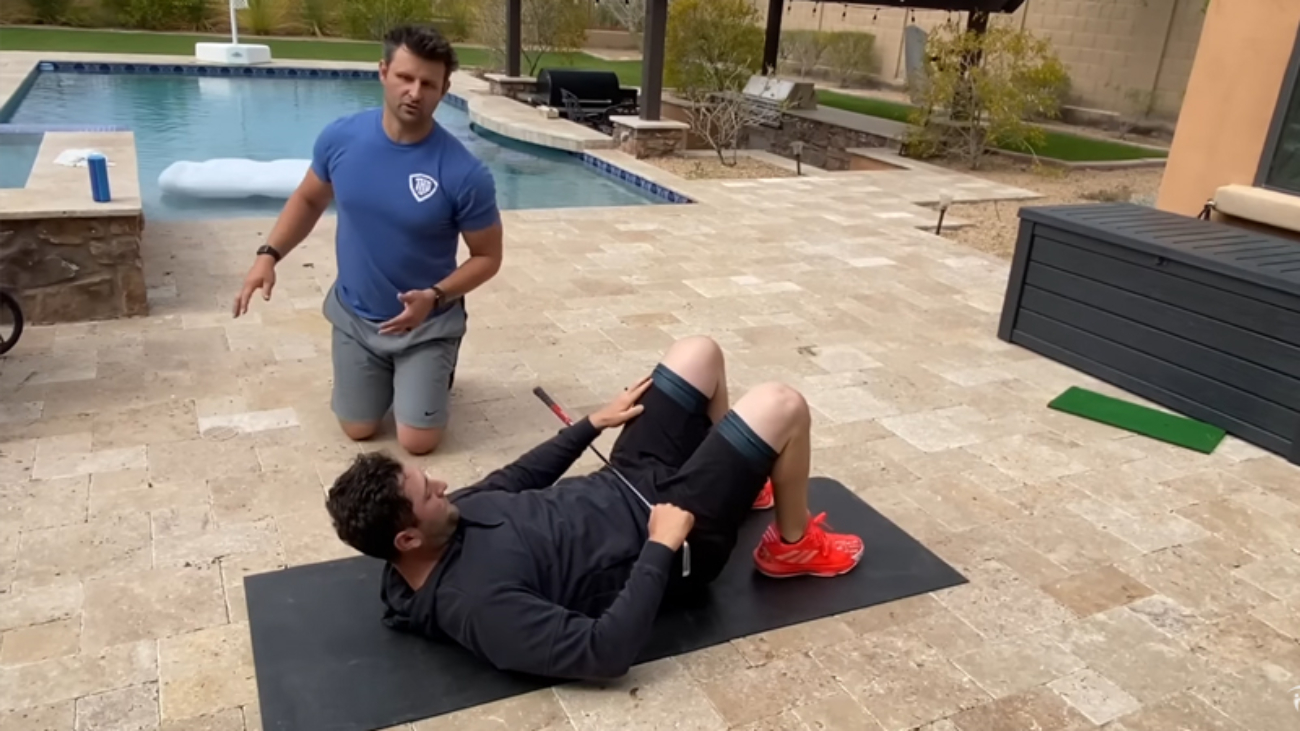
Hello everyone, I'm Jon Rahm, and this is my trainer Spencer Tatum. We're going to go through one of my favorite warm-ups that I do before every round. I do it almost every day, and it basically consists of warming up your core and glutes — the king and queen muscles in the golf swing.

On those days when we're all sitting at home a lot, these are the first two muscles that are going to go, so getting your core and abs activated is going to be very important. Spencer is going to guide me through it and explain what we're doing, and I'm going to give you my personal input on what I feel. The one thing you will need is an iron — try to get a long iron. I have a five iron here, and you're going to be using it throughout the whole exercise.

This warm-up helps not only with John's mobility and stability, but also prepares him to play. It can also be used as a strength warm-up on the road. So if you're at home sitting around a lot, you've likely got really tight hip flexors — especially if you've been playing Xbox — and this is going to help get everything back aligned before you get back to swinging your golf club or getting into training sessions
We're starting with John lying down on his back. 

As you can see, he has his five iron, and what he's really trying to feel is that pelvic tilt — pushing into the ground. He's going to take the club, apply a little bit of pressure to engage his core, and hold it. He's going to breathe in and push down the whole time, holding that midline as he comes back up. We're building stability in the core while also working mobility in the hips.

John is going to demonstrate about three reps here. As you can see, he's really focused on keeping pressure in both the upper and lower body while maintaining that stability. After that, he's going to move to a bridge — a core activation bridge, still using the five iron. The same concepts apply. He's going to hold that midline, create pressure, and focus on breathing as he extends that hip. 

A lot of people are going to want to arch the lower back — make sure you're really holding it and driving into the ground as you extend that hip. John is going to do three reps. Notice the pressure and the breathing — breathing out at the top, breathing in on the way down. This is really working single-leg strength in the lower body, hip mobility, and core stability up top.

Now we're going to start working on some thoracic spine mobility. John is going to start here and move right to left, with his feet going in the opposite direction of the club. He's really focused on that separation — how far can he go each way — while making sure his back doesn't arch, keeping his knees in line with his hips, and breathing out on the movement and in on the transition.

We really like this for creating separation in the golf swing and mobilizing the thoracic spine to get ready to play. This might actually be my favorite exercise. It's very important to focus on the timing — try to have your legs reach their limit at the same time as your upper body and club. If you're out of sequence, you won't be getting the full benefit of what we're trying to accomplish. It also helps with timing and sequencing in your golf swing.

Next is the hollow body position. This one I don't personally love, but it really helps lock in the midline. The key thing we don't want is a reverse spine angle or early extension. John is really focused on creating pressure with his top hand and lat, pushing down and compressing, breathing in and trying to stay as long as possible without losing that midline.

As he breathes in and out, he should feel tension throughout, and he shouldn't be losing that position. Notice the amount of pressure he's applying — it's a lot. Working that compression force is very important. If you lose it, the arm gets loose and you may arch your back. If you keep this pressure going continuously throughout the whole exercise, it's very hard to arch, especially when you're using that hip and pushing into the hand. We'll do the other side to stay balanced three to five reps — and what you're really trying to do is feel that connection from the opposite shoulder to the opposite hip.

Now we're going to move on to straight-leg sit-ups. Really focus on rolling down vertebra by vertebra, and coming back up the same way. Try to keep your arms above your head at all times. I'm pulsing a little bit the stronger you are, the easier it will be. Try to keep your arms straight without using them to get up. This is a great way to build that connection, warm up the body, and prepare for hip hinging, which is important for your setup. We usually do somewhere between 8 and 10 reps, or however many it takes until you feel warmed up.

Now we're going to start working up the chain. Notice how we started on the back — just like how we learn to move, we're warming up in that same progression. Now we move into a half-kneeling position. On this exercise, you start by relaxing back into your hip, put a little pressure down on the club, and then drive through and extend that hip to create balance on the midline. If you do it properly, you should feel a stretch in the hip while pressing down on the club, and you'll feel that connection from your shoulder all the way down to your knee. Hold it for about two seconds, and do about five reps on each side.

Notice how we're working on what we call the rack and stack John is racking it up and stacking straight up. We don't want to see him leaning back and losing that position. All the previous warm-up work is going to help here. If your core is activated and working properly, you won't lose your back position — your abs will keep you feeling like a straight plank. Do three more reps here, pushing down first and then driving that hip through to get that nice stacked feeling. It's actually very similar to a dead bug if you do it one-handed, you'll feel that same compression and connection.

Now we've worked through the transition period and we're moving to standing — specifically single-leg RDLs. This is not my favorite exercise. It's hard to maintain balance throughout, and I struggle with it if I haven't warmed up properly or haven't trained in a while. Try to keep your arm extended, maintain pressure between your leg and your arm, and perform a normal RDL. Try to reach parallel if you can, but never lose that pressure between your arm and your leg.

Notice how he's really working through the feet — gripping the toes into the ground to anchor the foot down. This helps prevent sway and slide in the golf swing. We're also working on loading the right and left hip, getting into that position so we can drive through the ball.

Not everyone works out every day, and not everyone has the stability for this right away — just work on it. If you fall a couple of times, don't worry about it. Focus on how your body is warming up, and don't stress too much about the RDLs if they're too technical. Just work your way up to it.

Now all the joints are involved, so we're working at a higher level. The last thing we're going to work on is a two-legged hip hinge to get ready to swing the golf club. For those who know, it's almost like presetting for a deadlift — but try to keep your elbows open, not closed, and keep the club touching your body as much as possible as you hinge.

What we're looking for is whether John can keep his head, shoulder blades, and glutes all connected to the club while putting force into the ground and loading the hips. Notice how his shin angle stays nice and vertical — he's not falling back and losing power, and he's not squatting too deep either. This is a challenging pattern. It looks simple, but it's much harder than it appears. 

Try switching hands as well. As soon as you feel the club leaving your body — if you start bending the upper body without hinging — you'll see the club is no longer touching your spine. That means you've gone too far, so bring it back. Now John, how important is breathing during this? It's important for keeping your tempo. You're not going to hit the ball while inhaling, so you need to work on that. 

Essentially, you inhale and hold your breath during the challenging part, and when you need to explode, that's when you exhale. So to put it simply — breathe in for stability, hold your breath during transitional periods, and breathe out when you're generating mobility and power. Breathe in, hold, and exhale hard at the top.

It's a very simple warm-up — all you need is a five iron and a mat if you're on a hard surface. This should get you ready to go. It's something everybody can do, especially now that so many of us are sitting down a lot. At the very least, it'll help prevent back pain and get your muscles working properly.

If you find one area that needs more attention, remember three to five reps on each side or each movement. If after three to five reps you don't feel like you've got it, do two or three more until you do. If it feels easy, do three and move on. It's more about the feeling and quality of movement than the volume. You can do this one to three times a day and you'll see a major improvement in your mobility and stability, which will hopefully translate into a better golf swing. 

Stay positive, stay home, wash your hands, and let's hope we can get through this with a positive attitude — and improve your golf game while we're at it. This is Jon Rahm and Spencer Tatum. We'll see you soon.
Credits: nextgengolf

9 Stretches to Benefit Your Golf Game

Playing golf is a great way to enjoy low-impact exercise. It’s a competitive, social sport that involves frequent walking around a course.

However, the repetitive motion of swinging your club can cause pain and injury. This commonly affects the arms and back, but it can involve any part of the body because golf swings are full-body movements.

In this article, we’ll explore 9 essential stretches for golfers. These stretches can help:

  • relieve golf-related pain
  • reduce your risk for injury
  • improve your overall performance

It’s recommended that you do these stretches before and after every round of golf. For optimal results, you should also do a set on your days off.

Golf stretches that can improve your swing

For a better golf swing, stretch your quadriceps. These muscles help move your knees, which help rotate your body.

You’ll need a bench or chair to do this stretch.

Quadriceps stretch

Start with your back facing the bench, feet hip-width apart. Place your hands on your hips or clasp your hands in front of your chest.
Bend your right knee. Rest the top of your right foot on the bench. Engage your right glute.
Bend the left knee, being careful to keep it aligned over the left ankle.
Straighten the left leg, returning to standing.
Repeat 2 to 5 times on each side.

Golf stretches for your back

Golfers often strain their back muscles. This stretch will help loosen tension in the area.

You’ll also need a bench or chair to do this move.

Forward fold with a chair

Start facing the back of the bench, feet shoulder-width apart. Hold the back of the chair and take a step back until your arms are extended.
Lower your upper body, keeping your back straight. Continue until you feel the stretch in your armpits. Hold for 30 seconds.
Repeat 2 to 5 times on each side.

Golf stretches for your hips

If you have tight hips, it may be difficult to squat during a golf swing. It also limits how well you can rotate your body.

To open your hips, try the following moves:

Seated hip stretch

This stretch relieves tightness in your hips, thighs, and back.

Sit up straight on a bench, a chair, or the floor. Put your left ankle on top of your right thigh. Plant your right foot on the ground.
Move your torso forward, bending at your waist. Continue until you feel the stretch in your left hip. Hold for 30 seconds.
Repeat 2 to 5 times on each side.

Kneeling hip stretch
If you can comfortably kneel on the ground, try this move. It’s great for stretching your hips, butt, and thighs.

Start on your knees, back straight. Plant your right foot on the ground, directly under your right knee. Position both knees at 90 degrees.
Lay your hands on top of your right thigh. Pull your shoulders away from your ears. Contract your core.
Slowly move the right foot forward, keeping the ankle below the knee, and lean forward until you feel a stretch in the left hip flexor. Hold for 30 seconds.
Repeat 2 to 5 times on each side.

Golf stretches for your elbows
The repetitive motion of golfing can lead to golfer’s elbow. In this condition, the muscles in your elbow and forearm become inflamed, causing pain and tenderness.

The following exercise can provide relief. It stretches the muscles in your forearm, which reduces tension in the elbow and arm.

Golfer’s elbow stretch
Extend your right arm in front of you. Face your palm down.
Use your left hand to pull your right fingers down and toward your body. Hold for 30 seconds.
Return your palm to starting position. Pull your wrist up and toward your body. Hold for 30 seconds. This completes one rep.
Repeat 2 to 5 times on each side.
You can also try this stretch with your palm facing up.

Golf stretches for your wrists
The above exercise feels great for the wrists. But you can also do the prayer stretch to further stretch your wrists. This move can help relieve carpal tunnel syndrome caused by constant gripping.

Prayer stretch
Press your palms together. Place them in front of your chest.
Move your hands toward your waist, keeping your palms against each other.
Hold for 30 seconds. Repeat 2 to 5 times.

Golf stretches for your core
A fluid golf swing relies on strong, flexible core muscles. This move stretches these muscles so you can turn with ease. It mimics a backswing and follow-through.

Core twist stretch
Stand up straight, feet shoulder-width apart. Cross your arms over your chest.
Bend your knees and lean your upper body slightly forward.
Turn your torso to mimic your backswing. Pause.
Rotate your body to mimic your follow-through. Hold for 30 seconds.
Repeat 2 to 5 times.

Golf stretches for your hamstrings
Your hamstring muscles are in the back of your thighs. They allow knee rotation and thigh extension, letting you turn during a golf swing.

To loosen them up, do this stretch. You’ll need a golf club and a step.

Hamstring stretch with golf club
Place your golf club behind your shoulders, holding one end in each hand. Stand in front of a step.
Set your right heel on top of the step, knee bent slightly. Lean forward at your waist, back straight.
Rotate your upper body to the right. Hold for 30 seconds. Repeat to the left. This completes one rep.
Switch legs and repeat. Repeat 2 to 5 times.

Golf stretches for your shoulders
Golf swings are also hard on the shoulders. Try this golf stretch to manage shoulder pain.

Shoulder swing stretch
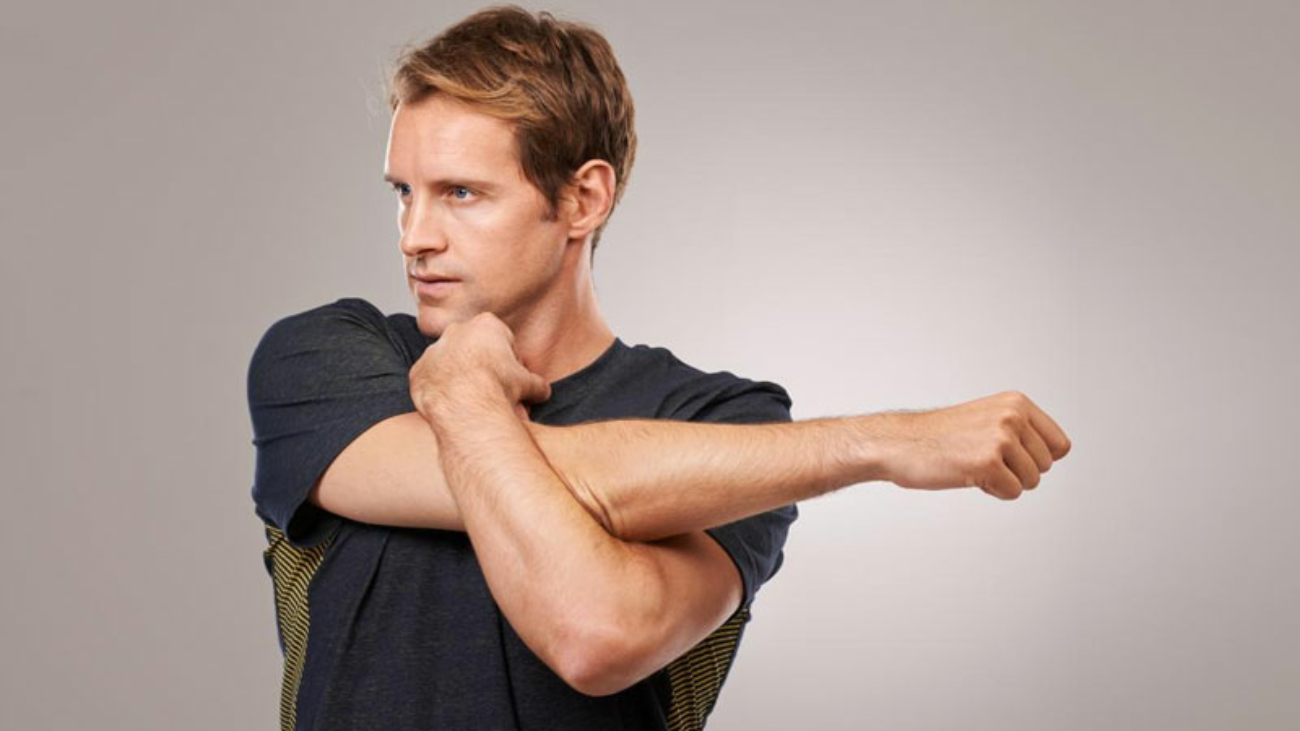
Start with your feet shoulder-width apart. Raise your right arm across your chest, placing the opposite hand on your right elbow.
Move your right wrist toward your left thumb, pointing your thumb upward.
Rotate your torso to the left. Tug on your right elbow. Hold for 30 seconds.
Hold your left elbow with your right hand. Turn your torso to the right and hold for 30 seconds.
Repeat 2 to 5 times.

Key takeaways
If you play golf, use these stretches as a warmup and cool down. You could also warm up by taking a few light swings.

In addition to regular stretching, applying ice and taking rest days can help manage pain.

Seek medical help if your pain lasts for more than 2 to 3 days or if you feel sudden, sharp pain during a game.

gem2

Coefficient of Restitution (COR) in Golf Clubs

The coefficient of restitution, commonly known as COR, is one of the most important technical measurements used to evaluate the performance of golf clubs. It plays a major role in determining how efficiently energy is transferred from a clubface to a golf ball at impact. For golfers, this can directly affect ball speed, distance, and overall performance.

Although the term sounds highly technical, the concept is fairly simple. COR measures how “bouncy” a collision is between two objects. In golf, it describes how much energy is retained when the clubface strikes the ball. A higher COR means the collision is more efficient and less energy is lost, resulting in faster ball speeds and potentially longer shots.

Understanding COR helps golfers appreciate how modern equipment design influences performance and why golf’s governing bodies regulate certain limits.

What is the coefficient of restitution?

The coefficient of restitution is a physics-based measurement that ranges from 0 to 1.

  • 0 means a completely inelastic collision where all energy is lost.
  • 1 means a perfectly elastic collision where no energy is lost.

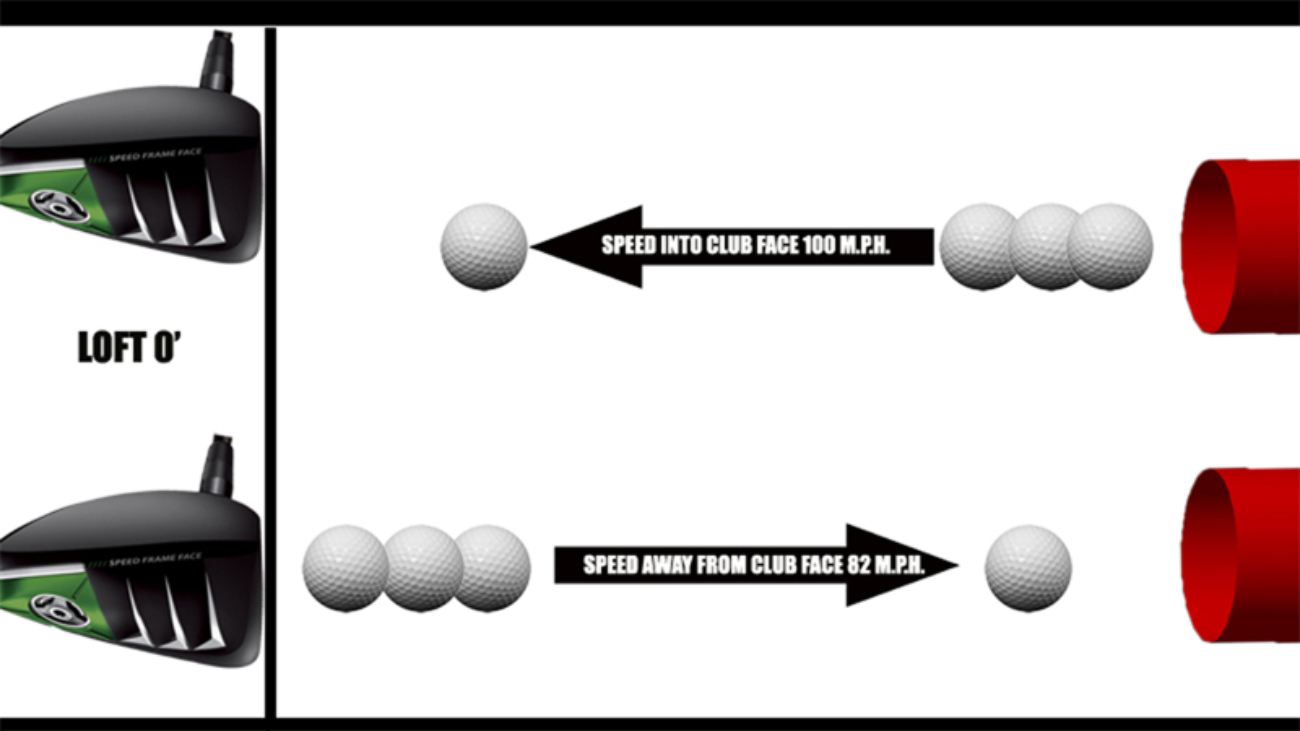
In golf, the collision between a clubface and a ball is somewhere between these two extremes. When a driver hits a golf ball, both the clubface and the ball compress momentarily. As they rebound, energy is transferred to the ball, sending it down the fairway.

COR measures the ratio of the ball’s speed after impact compared to the club’s speed before impact.

A higher COR means more energy is transferred to the ball, which usually results in higher ball speed and greater distance.

Why COR matters in golf performance

For golfers, COR is closely connected to distance potential. A club with a higher COR can launch the ball faster, assuming the same swing speed.

For example, if two golfers swing drivers at identical speeds but one club has a slightly higher COR, the ball struck by that club may travel farther due to increased ball speed.

This is why golf equipment manufacturers invest heavily in research and engineering to optimize the rebound effect of clubfaces.

However, COR alone does not determine performance. Other factors also play major roles, including:

  • clubhead design
  • loft
  • center of gravity placement
  • shaft flex
  • player swing mechanics

Even with the same COR rating, two clubs can perform differently depending on these design features.

COR limits set by golf’s governing bodies

To maintain fairness and prevent equipment from giving players an excessive advantage, golf’s governing bodies regulate COR.

The United States Golf Association (USGA) and The R&A established a maximum COR limit of 0.830 for drivers used in official competitions.

This means manufacturers cannot design drivers that exceed this rebound efficiency threshold.

The rule was introduced because technological advances in club design during the late 1990s and early 2000s began producing extremely thin, spring-like clubfaces that dramatically increased ball speed.

Without limits, golf equipment could have made courses significantly easier and changed the competitive balance of the sport.

Today, nearly all modern drivers are engineered to reach the legal maximum COR, often referred to as “pushing the limit.”

The trampoline effect

The phenomenon that allows drivers to approach the COR limit is commonly called the trampoline effect.

When the ball strikes the clubface, both surfaces compress slightly. The clubface then rebounds quickly, adding extra energy to the ball.

Manufacturers design clubfaces to flex just enough to maximize energy transfer while still remaining within legal COR limits.

Advanced materials and manufacturing techniques make this possible. These include:

  • titanium alloys
  • variable face thickness technology
  • precision milling
  • computer-assisted structural design

By carefully controlling how the face flexes, engineers can produce drivers that consistently deliver high ball speeds across larger portions of the clubface.

COR vs CT testing

While COR was historically the main measurement used to regulate club performance, modern testing often relies on Characteristic Time (CT) instead.

CT measures how long a steel pendulum stays in contact with the clubface during testing. This contact time is closely related to how much the face flexes and rebounds.

The USGA now uses CT testing because it is easier and more consistent to measure than COR.

Even though CT is the official testing method today, the golf industry still widely uses the term COR when discussing club performance.

How manufacturers optimise COR

Golf club manufacturers constantly seek ways to maximise COR while staying within legal limits. This involves sophisticated engineering and materials science.

One common strategy is variable face thickness. Instead of having a uniform thickness across the entire clubface, engineers design thinner sections in specific areas to allow more flex.

This helps maintain high ball speed even when the ball is struck slightly off-centre.

Another technique is multi-material construction, where different metals or composites are combined to control how the clubhead flexes during impact.

Artificial intelligence and computer simulations have also become important tools. Some manufacturers now use AI to analyze thousands of potential face designs to find the most efficient structures.

These technologies allow clubs to maintain high COR performance across a larger “sweet spot,” improving forgiveness for amateur golfers.

For most golfers, the concepts are closely related and essentially describe the same idea: how efficiently a clubface transfers energy to the ball.

Does COR affect irons and wedges?

COR is most commonly associated with drivers and fairway woods, where maximizing distance is a major design goal.

Irons and wedges, however, are typically designed with different priorities.

Many iron sets focus on control, launch angle, and spin characteristics rather than pure rebound efficiency. As a result, COR values for irons are usually lower than those for drivers.

Game-improvement irons may still incorporate thin faces and flexible designs to increase ball speed, but they are balanced with the need for precision and shot-shaping ability.

Wedges, meanwhile, emphasize spin and control around the greens, so COR plays a much smaller role in their design.

Misconceptions about COR

Many golfers assume that simply buying a club with a high COR will automatically increase their distance. In reality, equipment performance depends on many variables.

Swing speed, strike location, and launch conditions all influence the final result.

A driver that technically reaches the maximum COR limit may not perform well for a golfer if the loft or shaft does not match their swing.

Proper club fitting often has a greater impact on performance than small differences in COR.

Another misconception is that older clubs have significantly lower COR values. While modern technology has improved face design, many drivers from the past two decades already approach the legal limit.

The difference in performance often comes from forgiveness and adjustability rather than pure rebound efficiency.

The future of COR and golf equipment

Because COR limits are already tightly regulated, future improvements in golf club performance will likely come from other areas of design rather than higher rebound efficiency.

Manufacturers are focusing on:

  • larger sweet spots
  • improved aerodynamics
  • adjustable weighting systems
  • advanced materials
  • AI-driven clubface design

These innovations can help golfers achieve more consistent ball speed and better launch conditions even without increasing the COR beyond legal limits.

Conclusion

The coefficient of restitution is a fundamental concept in golf equipment design. It measures how efficiently energy is transferred from the clubface to the golf ball at impact, directly influencing ball speed and potential distance.

Although COR has a strict limit set by golf’s governing bodies, it remains an important benchmark for evaluating driver performance.

Modern golf clubs are carefully engineered to approach the legal COR threshold while improving forgiveness, consistency, and overall playability.

For golfers, understanding COR provides insight into how equipment works and why club design continues to evolve. However, the most important factor will always be the player’s swing. Even the most advanced driver cannot replace solid technique and proper fitting.


Credits: sportstourismnews.com

16 dates golf fans need to circle in 2022

The calendar seems to turn as quickly as we can press our finger to the screen and scroll down on our phones. Is it really approaching three years since Tiger Woods’ incredible triumph in the Masters? Or more than 10 months since the car accident that again altered the path of his life? We have our memories, good and bad, but the beauty of sports is that it gives us seasons for which to look forward, when all is new and possible. And no campaign, of course, is longer than in golf, which delivers nearly a full 12 months of thrills and heartbreak.

This week, the PGA Tour’s West Coast Swing starts again with the Sentry Tournament of Champions in Maui. The wraparound season had already begun, but for many, the images of palm trees blowing in the Hawaiian breeze at Kapalua give us reason enough to feel warmly optimistic about what the coming golf year will bring. With that in mind, we offer a few of those dates you might want to circle on your calendars—and not just the ones you think—as you look ahead to another intriguing year in our sport.

Jan. 30: APGA Tour plays on the big stage

Just like most pro mini tours, the Advocates Pro Golf Association—a circuit founded to provide more professional playing opportunities for minorities—has mostly toiled in anonymity. It got some exposure in 2021 when the Farmers Insurance Open offered a special exemption to APGA standout Kamaiu Johnson, and now the APGA is getting a chance to take a far bigger stage. After the Farmers Insurance Open finishes on Saturday, the APGA will be on Golf Channel on Sunday when it plays the Torrey Pines’ South Course in the final round of its 36-hole event, called APGATOUR at the Farmers Insurance Open (the PGA Tour event wrapping up the previous day). Is there a star in the making for us to discover? We’ll see.

Feb. 3-6: Saudi International

In any other year, the Saudi event—which was formerly a part of the DP World Tour (which was formerly the European Tour)—was merely a curiosity to American fans, mostly to see which PGA Tour players were drawn to the Middle East for sizeable appearance fees. This year, it seems far more compelling now that the talk of rival tours has heated up, and the PGA Tour has given permission to its players to jump on their private jets (and pad their bank accounts) in what is now an Asian Tour event. Among them is Phil Mickelson, who will miss Pebble Beach, where he’s won five times.

March 10-13: Players Championship

It’s crazy to consider that the week of the Players will mark two years since the pandemic turned our lives upside down. Depending on how the first couple of months go with the Omicron variant, the tournament is expected to greet full galleries after being wiped out after one round in 2020 and limited to 20 percent capacity in 2021. Justin Thomas is the defending champion after narrowly making the cut and then rallying on Sunday to overtake Bryson DeChambeau and Lee Westwood.

March 27: Last chance (almost) for the Masters

The last opportunity to reach Augusta National—aside from winning the Valero Texas Open in the week prior—is to get into the top 50 in the Official World Golf Ranking at the end of the Corales Puntacana Championship. Good luck, bubble dwellers.

March 31-April 3: The Chevron Championship

Tears no doubt will flow for some when the LPGA plays the event for one last time at Mission Hills and the California desert, home to the tournament since it was founded by Dinah Shore in 1972. With Chevron as its new sponsor, the tour’s first major of the year since 1983 is set to move to the Houston area beginning in 2023. Patty Tavatanakit defends after an impressive breakout win in ’21.

April 7-10: Masters

The color and atmosphere of the men’s first major of the year is expected to return to full bloom after two years of missing Augusta’s most cherished gift: the roars. Hideki Matsuyama will be back as defending champion after his history-making turn last April.

May 19-22: PGA Championship

Is it possible Tulsa’s weather will actually be tolerable in mid-May? Southern Hills Country Club has hosted some oppressively sweaty summer majors, but this one might get a break with a spring date that opened when the PGA of America yanked the event from Trump Bedminster after the Capitol riots on Jan. 6, 2021. Phil Mickelson is the defending champ from Kiawah, while the last man to win a major in Tulsa (Tiger Woods in the 2007 PGA) very likely will be watching from his couch.

June 2-5: U.S. Women’s Open

Pine Needles in Southern Pines, N.C., this year’s host, only got into the USGA Women’s Open rotation in 1996. But it has delivered impressive champions since: Annika Sorenstam in ’96, Karrie Webb in ’01 and Cristie Kerr in ’07. Yuka Saso of the Philippines defends after winning last year’s Open in a playoff at The Olympic Club.

June 7: Golf’s Longest Day

Ten sites … more than 800 players … 36 holes. And to the most talented and courageous on “Golf’s Longest Day,” there awaits a spot in the U.S. Open. There are 11 final qualifiers (the one outside of the U.S. being in Japan), and June 7 marks the 10 contested around the country in America. Last year, former Masters champion Charl Schwartzel made it through the gantlet, as did Wilson Furr, a University of Alabama star who didn’t even have a spot in his qualifier until some late withdrawals. Therein lies the beauty of the Longest Day.

June 16-19: U.S. Open

With the national championship returning to The Country Club in Brookline, Mass., for the first time since 1988, you’ll do yourself a favor if you brush up by reading one of the best golf books of all-time—Mark Frost’s The Greatest Game Ever Played—that recounts amateur Francis Ouimet’s Brookline triumph in 1913. Of course, memories of the Americans’ Sunday comeback at Brookline in the 1999 Ryder Cup linger, too. Jon Rahm is the defending champion from Torrey Pines, while Englishman Matt Fitzpatrick has a shot to pull off a USGA double after seizing the 2013 U.S. Amateur at Brookline.

July 14-17: Open Championship

A visit to St. Andrews makes every Open there special, but this one is particularly notable. It’s the 150th playing of the championship that was first contested in 1860. This will be the 30th Open played at the Home of Golf, with Zach Johnson being the last to win on the Old Course in 2015. Collin Morikawa will defend the title he captured last year at Royal St. George’s.

July 18-20: Inaugural U.S. Adaptive Open Championship

With a progressive stroke of inspiration, the USGA will hold the inaugural U.S. Adaptive Open Championship on the No. 6 Course at Pinehurst. The 54-hole event is open to men and women who have a physical, sensory or intellectual impairment. We’re looking forward to seeing and hearing the heroic stories for this one.

Aug. 11: FedEx Cup Playoffs begin

At a time in summer when we used to gear up for the PGA Championship, the PGA Tour begins its postseason with the FedEx St. Jude Championship. The top 125 from the FedEx Cup points list will qualify before being trimmed to 70 players for the following week’s BMW Championship. The BMW is scheduled for Wilmington Country Club, marking the first time the tour has staged an event in Delaware.

Aug. 25-28: Tour Championship

The top 30 from the BMW reach East Lake in Atlanta, where the FedEx Cup will be awarded for the 16th time. The financial stakes have never been sweeter, with the winner getting a record $18 million. Four of the last five champs have been first-timers. Anyone else like Jon Rahm or Xander Schauffele?

Sept. 22-25: Presidents Cup

Pushed back a year because of the COVID-19 pandemic, the matches between the U.S. and Internationals will be played at Quail Hollow in Charlotte. Trevor Immelman helms the Internationals opposite of Davis Love III, who must be feeling confident for two reasons: The Americans dominated Europe in the 2021 Ryder Cup and the U.S. has lost only once in the previous 13 contests—that lone time coming in Australia.

Dec. 31: Rules of Golf study day

On Jan. 1, 2023, the USGA and R&A will make their next update to the Rules of Golf, the first since the governing bodies modernized the rules back in 2019. You shouldn’t expect a complete overhaul like we saw four years ago, but if history tells us anything, there will likely be a handful of adjustments everyday players will need to note (changes have yet to be announced but will likely come by the end of the summer). Before the ball drops on New Year’s Eve, you might take a few minutes to familiarize yourself with the 2023 Rules.

Shoulder-Stretch

4 Stretches You Should Do Before Golfing

It’s crazy how fast a game of golf can turn around. All it takes is a hole in one or an under-par hole to fix your score.

On the other hand, one wrong move can mess up your whole game. This isn’t always in terms of your score, either.

Imagine setting up to hit the first swing on a new hole only to hurt your back, or not being able to put your best shot because you have pain in your wrist.

These are just a few reasons why it’s so important to make golf stretches a part of your routine. A few simple movements before stepping out on the course can transform your whole game.

Here are 4 stretches for golf you should do every time you’re about to play.

1. Hamstring Stretch

Golf is all about the swing, but the best swings are a combination of upper and lower body strength. As such, you need to give your legs just as much love and care as you do your back and shoulders, particularly in your hamstrings.

One of the best ways to stretch this muscle is to do a forward fold. You can bend your knees slightly if you’re not too flexible in order to get more of a release. It helps to step your feet apart a bit instead of having them touch, and, this stretch actually releases tension in your lower back, too.

2. Back Stretch

Speaking of releasing back tension, try getting on the ground and doing a twist. Lay on your back and twist one leg over the other, and then look to the opposite side. So, if you’re twisting your right leg toward the left, you want to face the right with your arms sticking straight out like a letter “T.”

You should immediately feel the stretch in your spine even if your knee doesn’t touch the ground. You might even get a nice little crack out of this stretch.

3. Shoulder Stretch

Once the back is warmed up a bit, you can focus on the shoulders. Stand up and find a flat wall to lean up against (not a textured brick or round column).

Face the wall and stick one of your arms out to the side so it’s perpendicular to the rest of your body. Stand as close to the wall as possible and place your arm and palm flatly against the wall. Then, turn your head to the opposite side and start to lean back a bit to put pressure on the arm on the wall.

Repeat on the other side, and then do some circles with your shoulders in both directions (clockwise and counterclockwise).

4. Wrist Stretch

The final stretch worth doing before a round of golf is a wrist stretch.

This is the easiest one on the list. All you have to do is hold one hand out in front of you with the palm facing up. Then, turn your fingers down toward the ground with your palm still up, and use your other hand to push your fingers in your direction. Push gently at first, and then build up more pressure for a deeper stretch.

More Golf Stretches and Other Things to Improve Your Game

It’s incredible how much your game improves when you start making golf stretches a part of your routine. Usually, it’s small adjustments like this that make the biggest difference.

golf league

How to manage Golf Leagues with Smart Golf League App

Golf leagues are a vital part of any golfing community. They add to the comradeship and interest in the game and ensure participation. Managing Golf leagues and league tournaments is generally a thankless job. The Golf league management requires sending out invites for the tournament, setting up the tournament, compiling all the results, sending out the results and if the league has an Most valuable player or best player for the season then that calculation has to be done also. Not to mention if multiple tournament types are played then managing them in parallel can be a daunting task.

Gem Golfers Golf League App offers the opportunity to automate the whole process of league management and summarize that into a few minutes task on league managers cellular devices. It also offers an enhanced and improved golfing experience to all the golf league members with advanced features and tools like:

  • Live leader board
  • All historical data of the previous games
  • Detailed scores per hole
  • Ability to add advanced game improvement statistics by individual players
  • Receive information from league organizer through in app messages
  • The full season league schedule is available within the application
  • The Tee off time, Tee box and players partners details is also available as soon as the groupings are confirmed

And all this is available within the app for each and every individual player.

Digital Scorecard is simple and intuitive, with a few clicks score for each hole for all the group as well as detailed statistics are added. In addition the option is available to set the tournament where players themselves can add the scores or the league can ask marshals or scorers to add the score. In both the instances the scores are added via the mobile app and the data is available real time for all the players and members of the league.

Besides it will take out all the hassles and issues when it comes to setting up and calculating points for complicated games for example stable ford. Allowing the league organizers to offer many new and interesting formats of play during the course of the season.

GemGolfers saves your time

GemGolfers will allow you to save a considerable amount of time. It automates almost all of the functions of league management and tournament setup and management. Which will allow league owners / administrators to efficiently manage their leagues with minimal time commitment and via their mobile devices. GemGolfers is a unique golf app in this sense as it specifically offers solutions for Golf leagues/ groups and tours.

User-friendly interface

Any golfing app requires the golfers to input scores during their game the UI has to be user friendly and intuitive. GemGolfers has been designed with exactly that in mind. Now golfers can within a few seconds and a couple of clicks enter the score for the whole group in the app. Which is then reflected real time in the live leader board, available to all the participants and league members via their mobiles or the URL via web browsers.

GemGolfers makes the game easy for golfers:

With GemGolfers the league administrators and players now don’t have to worry about any information, scorecard, leader board or results. All this is done in real time. All the back and forth communication for finding your tee off times, the tee box and the playing group as well as the leader board is taken out of the equation. This and all other information for the league is available within GemGolfers for the Golf league members.

GPS Distances

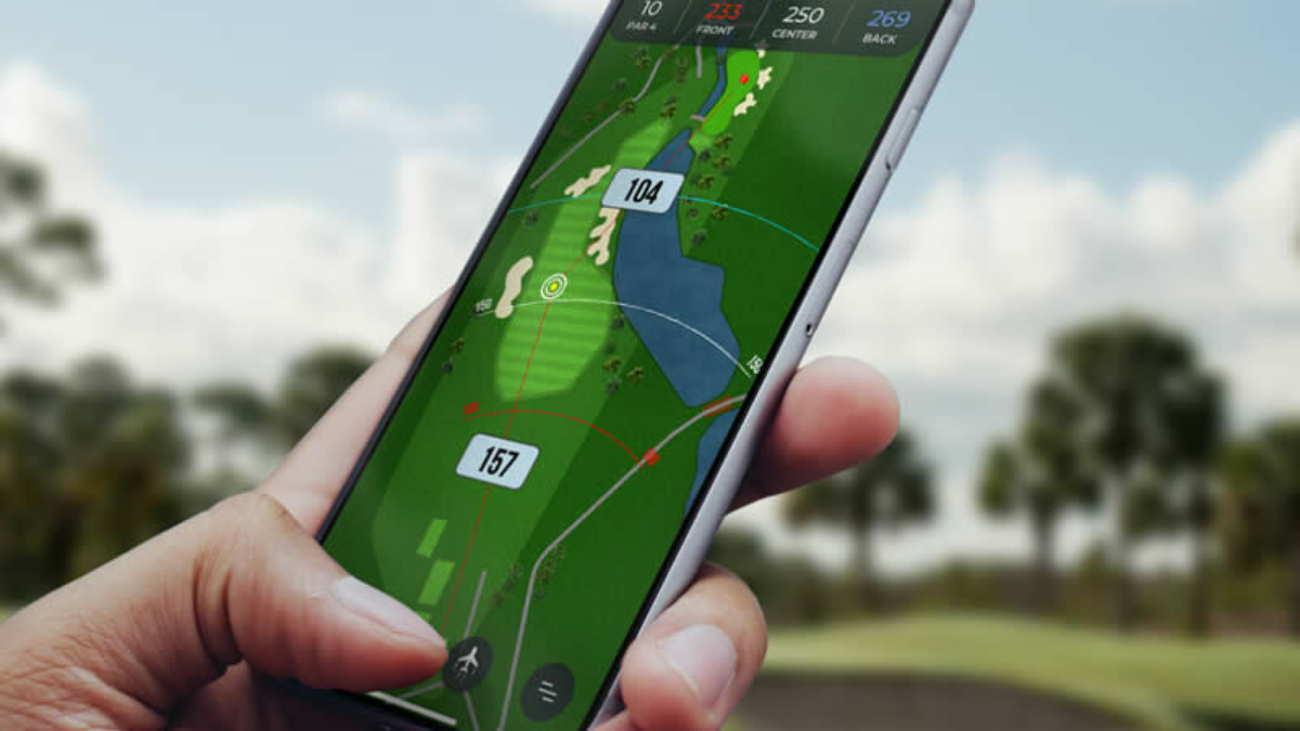
GemGolfers offers GPS distance information for the players. The advanced GPS system allows the user to get the distance from the tee to the green or pick an interim point and also get a distance for the second shot. In addition players can move the flag on the green to find out the exact distance to the pin. And set the distance marker to their location to see exactly the distance required for their next shot. Making the game predictable and fun.

Offers live leader board

Live leader boards is a game changer. This particular feature previously was only available to large and PGA tournaments but now even a small league / group can avail this functionality. The ability to know the scores of all the participants and where you stand among the peers is an immersive experience. The ability to know the strokes required to win in the last stretch or the last hole can allow a person to play with different strategies. The live leader board available for the whole league now includes the non playing members to be part of the tournament even without participating.

Conclusion:

GemGolfers is the must and go to app for any Golf League or Golf group. The induction of this app in the league will reduce the time required for management, set up and execution of tournaments also reducing the communication between organizers and players and above all automating the dissemination of the scores, leader boards and offering the ability to play various playing formats with same ease. Result is an all inclusive and immersive experience that can only be rivaled by a large PGA tournament.

golf app

9 Best Golf League Apps For iPhone

Golf league apps with GPS function are pricey gadgets, and their cost isn’t always justifiable. After all, they’re just relatively unimpressive computers with a bunch of tracking sensors and a mediocre display. That’s why golf League Apps for iPhone have taken the planet of golf by storm, helping other golfers perfect their game and have more fun on the course.

Grab your bag and have some fun:

Our top EIGHT best golf apps for iPhone won’t turn you into subsequent Rory McIlroy, Jason Day, or Tiger Woods, but they’re bound to offer you yet one more reason to grab your bag, call your buddies, and have some fun.

Golf League apps run the spectrum from fun and fanciful to super-technical, with an abundance of tech to reinforce your experience.


18Birdies Golf GPS & Scorecard:

18Birdies’ aerial view is full of stats to up your game. Its rich features and ever-growing community make it an excellent place to start out. Its on-course functions include scoring, statistics tracking, and mapping. There’s also a handy tab for logging any friendly bets your group may need to be wagered.

You can also fill your clubhouse downtime by browsing the app’s news feed or Dream Games feature. It will reward you with swag both minor (gloves, head wear) and major (trips to the Masters and U.S. Open).

GemGolfers

One of the best apps GemGolfers has transformed the golf round into an immersive & interactive experience. The offers ability to set up your round or tournament in minutes with automatic flight set up, choice of 1 or 4 day tournaments and multiple playing formats to choose from GemGolfers presents comprehensive ability to record and view your game improving statistics in efficient and easy graphs.It has offered live leader board for each tournament which is available on internet and mobile.


Golfmatch:

Borrowing a touch from dating apps to offer you the simplest chance of meeting compatible golfers. It displays your skill level and preferred methods of play (competitive, friendly, couple’s golf, etc.) on an area map.

Advanced golfers often address one source of instruction (a PGA professional) as their games develop. Beginners, however, can enjoy experimenting with the fast, easily digestible tips that are the stock-in-trade of Golf Channel Academy’s vast video content.

The Golf Tracer

Fine-tune the design of your shot tracer to form it social media-ready. Here’s something everyone can agree on: Shot tracers are awesome.

You need to just point your iPhone at a golfer and therefore the Golf Tracer will produce one among those candy-coloured arcs that have revolutionized PGA Tour broadcasts. It’s also perfect for posting to social media when your buddy hooks one off the cliff on the 18th at Pebble Beach.

The Official Rules of Golf

For decades, dog-eared copies of the USGA’s governing pamphlet have burrowed deep within the recesses of each competitive player’s bag. Because golfers who aren’t sure of a rule often worry about slowing down play behind them, the sweetness of the principles of Golf is obvious: Its search function finds the relevant decision in seconds.

Golfshot Plus: Golf GPS + AR

Instead of displaying a basic aerial view of the opening, you’re playing, Golfshot Plus uses augmented reality (AR) to point out you distances to the green, hazards, and targets from your own point of view. Among the app’s many valuable features are its membership options, which even include video instruction from top teachers like Martin Chuck and Sean Foley.

Baggr Caddies |Golf Caddie App

Baggr Caddies quickly connects caddies and club pros. it initially began to help golfers find caddies. It still does that, but the app has since morphed into an excellent tool for club pros and caddies masters to raised organize their programs.

Through efficient scheduling and centralized communication, it can turn a caddie yard from a price centre into a self-sufficient enterprise, sometimes with enough money left over to defray lost cart revenue or throw into a bonus pool.

Hudl Technique Golf

Hudl Technique is widely employed by athletes and coaches in many sports (baseball, soccer, track and field) to record and review a movement in the movie. Golfers have their own version of the app: Hudl Technique Golf shows you your swing side by side with top Tour players.

This is often especially useful for seasoned players who can interpret a video’s swing positions and anatomical information.Golf league apps are revolutionizing the game of golf through the innovative technology.

Golf Genius

Golf pros are famous for fixing long hours on the range, but teaching is typically only one of the many responsibilities. The event planning app Golf Genius and its accompanying website are an important time-saving tool. For those organizing tournaments, it handles registration and payment, builds easy custom websites, and takes care of live scoring. For golf trip hosts, it arranges pairings, travel, tee time, and hotel logistics, and may even assemble digital photo books as keepsakes.